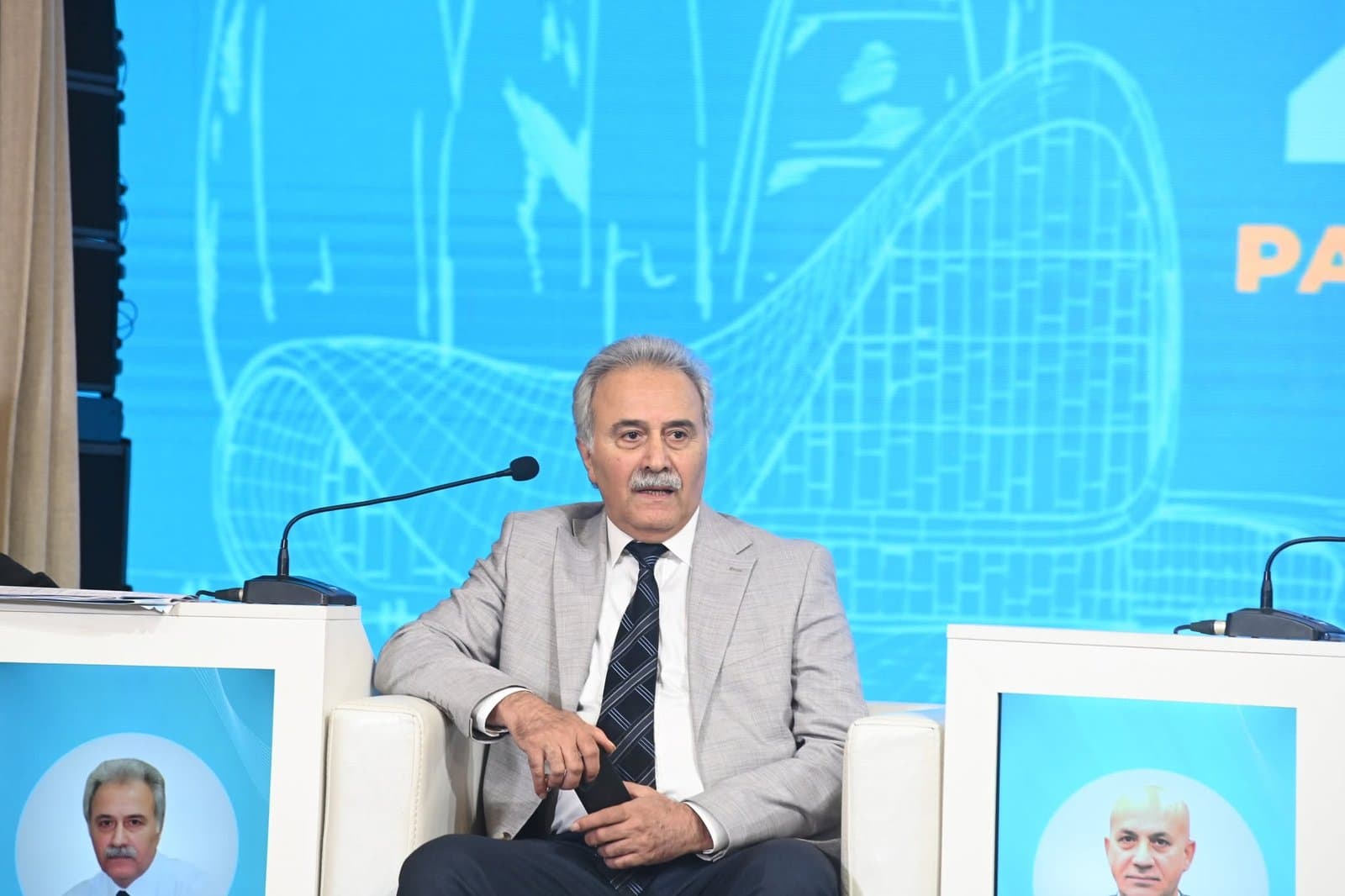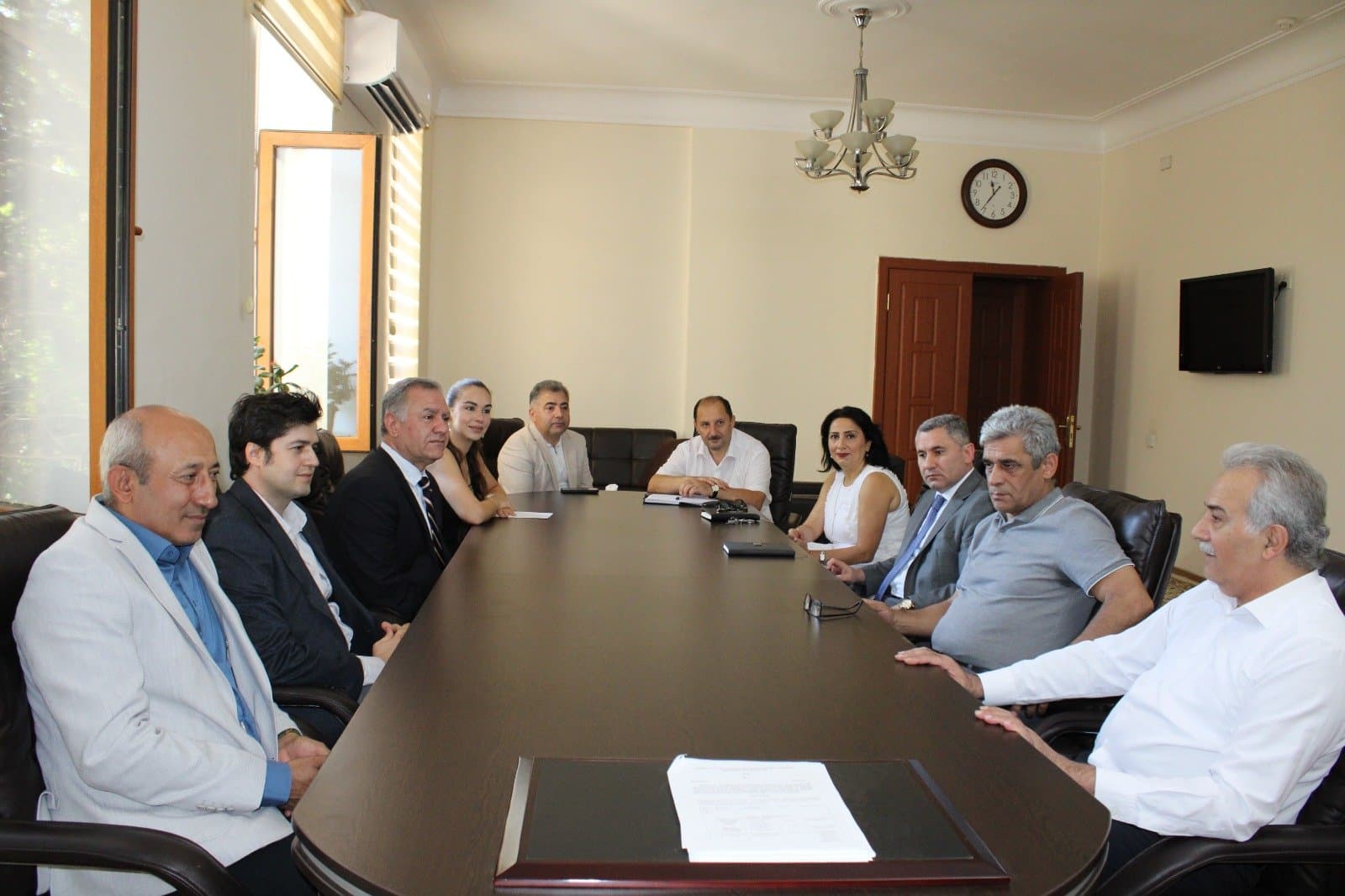


On March 14, 2022, held the next online scientific seminar at the Institute of Economics of ANAS
Employees of the Institute of History of ANAS and higher education institutions also attended the event chaired by the Director General of the Institute of Economics of ANAS, Doctor of Economics, Professor Nazim Muzaffarli.
A report on "Genocide of Azerbaijanis (1918)" was heard at the Scientific Seminar of the Institute of Economics.
Held the next online scientific seminar at the Institute of Economics of ANAS on March 14, 2022.
Employees of the Institute of History of ANAS and higher education institutions also attended the event chaired by the Director General of the Institute of Economics of ANAS, Doctor of Economics, Professor Nazim Muzaffarli.
Senior researcher of the Institute of History named after Abbasgulu Agha Bakikhanov of ANAS, doctor of historical sciences Vagif Abishov made a report on "Genocide of Azerbaijanis (1918)". Speaking about the genocides committed against Azerbaijanis by Armenian armed groups in 1918, the rapporteur said that Baku, which became the economic and political center of the South Caucasus in 1917-1918, also became the center of class struggle and power struggles.
The formation of a majority of Armenians in the Baku Bolsheviks, who were extreme propagandists of VI Lenin's idea of class struggle and proletarian dictatorship, had serious consequences for the Turkish-Muslim population of Azerbaijan. Under the Bolshevik banner, the Armenian Dashnaks, taking advantage of favorable political conditions, carried out a massacre of the Turkish people in Baku for three days from March 30 to April 1, 1918, in accordance with a pre-arranged plan, which resulted in the death of more than 12,000 civilians.
V.Abishov noted that the Extraordinary Commission of Inquiry (ECI) established by the government of the Azerbaijan Democratic Republic and operating from July 1918 to April 1920 was based in Baku, Shamakhi, Guba, Lankaran, Goychay, Zangazur, Shusha and other cities of Azerbaijan. Collected 36 volumes and 3,500 pages of documents to inform the world community about the massacres committed by Armenian armed groups against peaceful Azerbaijanis in their villages. Materials reflecting the acts of violence committed by Armenian armed groups in and around Baku, 6 volumes of 740 pages, 4 volumes of 340 pages on Kurdamir and other villages of Goychay district, 2 volumes on Zangazur, 80 pages, 7 volumes of 925 pages on Shamakhi city and Shamakhi district, 3 volumes of 451 pages on Guba city and Guba district, etc.
In September of 1918, on the instructions of the chairman of the FTC, Alakbar bey Khasmammadov, a member of the commission, Mirza Javad Akhundzadeh, with the help of photographer Litvinov, photographed public buildings and private buildings belonging to Muslims destroyed and burned by Armenians in Baku. The photos show the editorial office of the "Kaspi" newspaper on Nikolayevsk Street, the east side of the "Ismailiyya" building of the Muslim Charity Society, the Dagestan Hotel, Khanlarov's house on Bazar Street, the "Alexandria" hotel building, the south side of the Tazapir mosque and the Shah Masjid building and etc. was destroyed.
Abishov said that the 23 draft resolutions adopted by the FTC and the materials collected in the investigation, consisting of 7 volumes and 925 pages, provided detailed information about the atrocities committed by Armenians in Shamakhi and Shamakhi district in March and April of 1918. During the Armenian attack on Shamakhi in March-April 1918, more than 8,000 Turks and Muslims were killed, including 1,653 women and 965 children.
On May 9, 1919, detailed reports were prepared and submitted to the commission on the basis of investigative materials reflecting the genocides, looting and other acts of violence committed by Armenians against the population of Javanshir, Shusha, Jabrayil and Zangazur villages of Yelizavetpol province (Ganja). FTC documents state that 115 Muslim villages in Zangazur district were destroyed by Armenians. At the same time, 3257 men, 2276 women and 2196 children were killed and 1,060 men, 794 women and 485 children were injured in 115 villages. Armenians conquered Khoy, Salmas, Urmia, Sulduz and others of South Azerbaijan. He also committed acts of genocide against the Turkish-Muslim population in cities and villages. As a result of these genocides, more than 200,000 people were brutally killed.
The historian stressed that the Turkish-Muslim population living in their native lands were killed by Armenians from time to time, the survivors were deported, their property was appropriated, and the historical monuments of those places were destroyed. Armenians convinced the world powers, especially the Christian world, of their false plans, and with their financial, political and military assistance, managed to establish a state in 1918 at the expense of Azerbaijani lands. Today, Armenia does not hide its insidious policy against Azerbaijan. Therefore, in order to prevent the enemy's aggressive plans, we must study and remember the events of the previous pages of history and be ready for the enemy's provocations.
Then questions on the topic were answered, extensive discussions were held on the historical genocides committed by Armenians against our people, land claims, political events in the region in 1918, problems related to the study and teaching of Azerbaijani history (economics.com.az).