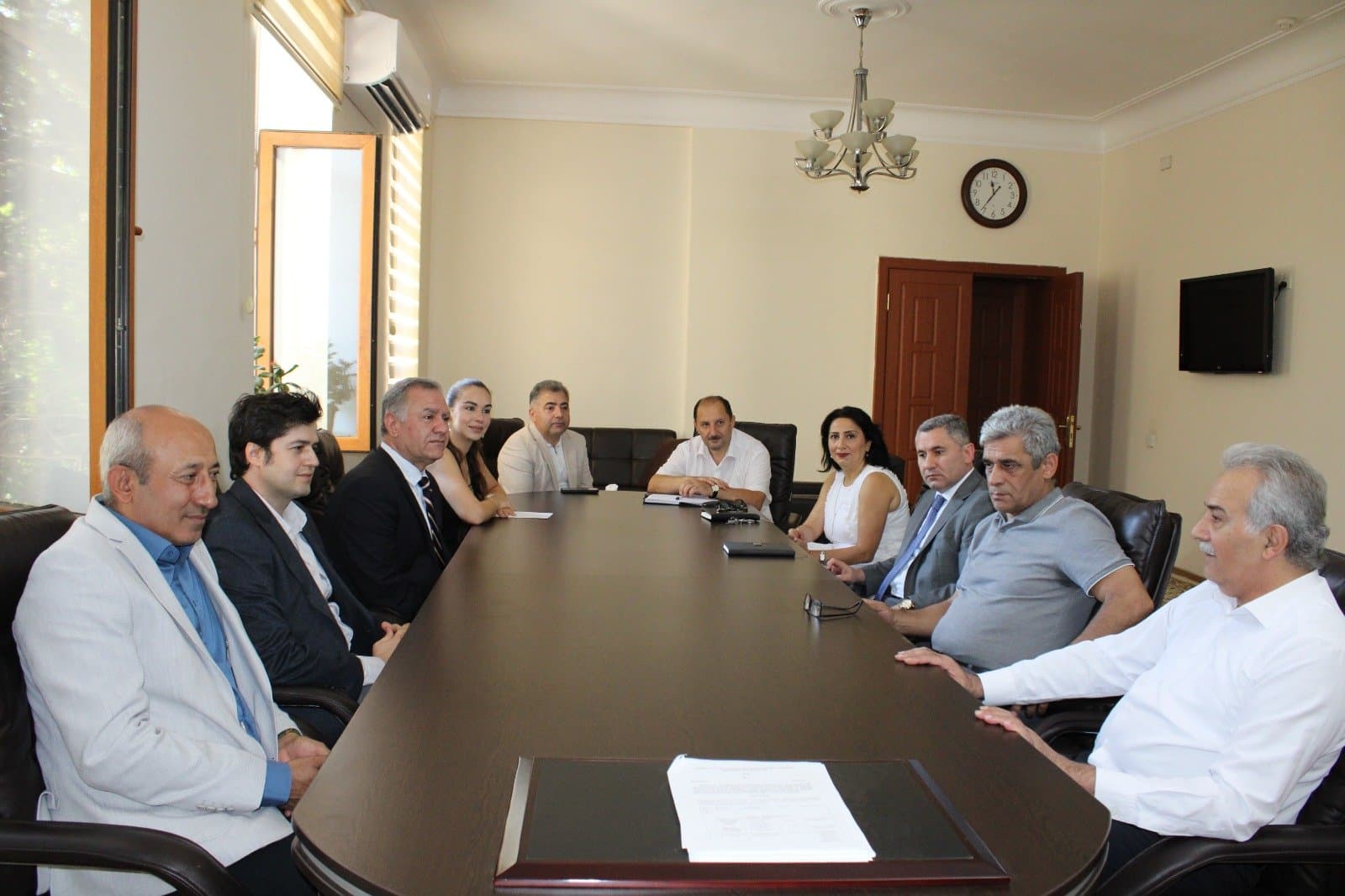


On October 4, 2021, held the next online scientific seminar at the Institute of Economics of ANAS. Opening the seminar, Director of the Institute of Economics of ANAS, Doctor of Economics., Professor Nazim Muzaffarli gave information about the main topic of discussion of the event and the speaker
 Leading researcher of the department "Innovation Management and Problems of Scientific Development" of the Institute of Economics, Ph.D. in Economics, associate professor Emin Mammadzadeh made a report on "Islamic financial organizations: current situation and development prospects." The rapporteur said that the Islamic financial system is a union of financial institutions that accept deposits from individuals and legal entities on the condition of earning income under Islamic law, invest in the client or on their own behalf, and direct other non-prohibited economic activities. The Islamic financial system is growing at an unprecedented rate of 15-20% despite the global financial crisis. Today, more than 500 financial institutions operate on Islamic principles, and all of their managed assets have exceeded $ 3 trillion globally. Some economists attribute the dynamic growth rate of the Islamic financial system (IFS) to the inflow of cash to Arab countries as a result of high oil prices. However, the dynamic development of IFS is largely due to the growing number of religious Muslims who are unable or unwilling to use the services of traditional banks. This factor and the IFS's resilience to the crisis that has accelerated the trend of traditional banks to establish branches and divisions operating in accordance with Sharia principles. This in itself played the role of global propaganda for Islamic finance. As the specifics of the activities of Islamic banks isolate them as much as possible from the traditional financial system, these institutions were not so much affected by the crisis. Therefore, IFS is already a global trend. However, there are major obstacles to the globalization of IFS.
 Speaking about the main problems of IFS on a global scale, Assoc.prof., E.Mammadzadeh said that the most serious issue is the legislation of the states in this area. Currently, only the laws of Iran and Sudan on the banking system are based on full Islamic rules. Although Arab states allow traditional banks to operate in their territories, the local population uses only the services of Islamic banks. This is due to the fact that the local population is more religious. These countries have adopted a separate law on Islamic banks. In countries without such legislation, the activities of these financial institutions face great challenges. At the same time, sharia convergence is another major barrier to IFS expansion. Unified international standards for Islamic banking have not been established yet. Globally, there are few professionals with the knowledge and skills in Islamic finance compared to traditional finance. Islamic banks are also criticized for not having an insurance system for deposits.
However, E.Mammadzadeh believes that the benefits of such financial institutions in economic development can play a major role in preventing the global crisis and declining production. In particular, noting the differences between Islamic financial institutions and traditional banking, the development trends and growing dynamics of Islamic banking in the world, the researcher assesses the application and development of IFS in Azerbaijan as a promising financial sector.
At the end, the speaker answered questions and had interesting and wide-ranging discussions on bank lending and its terms in Islamic finance, placement of deposits, income generation and distribution, insurance system in this field, social responsibility, development trends of Islamic finance in the world and prospects of Islamic banking in Azerbaijan (economics.com.az).