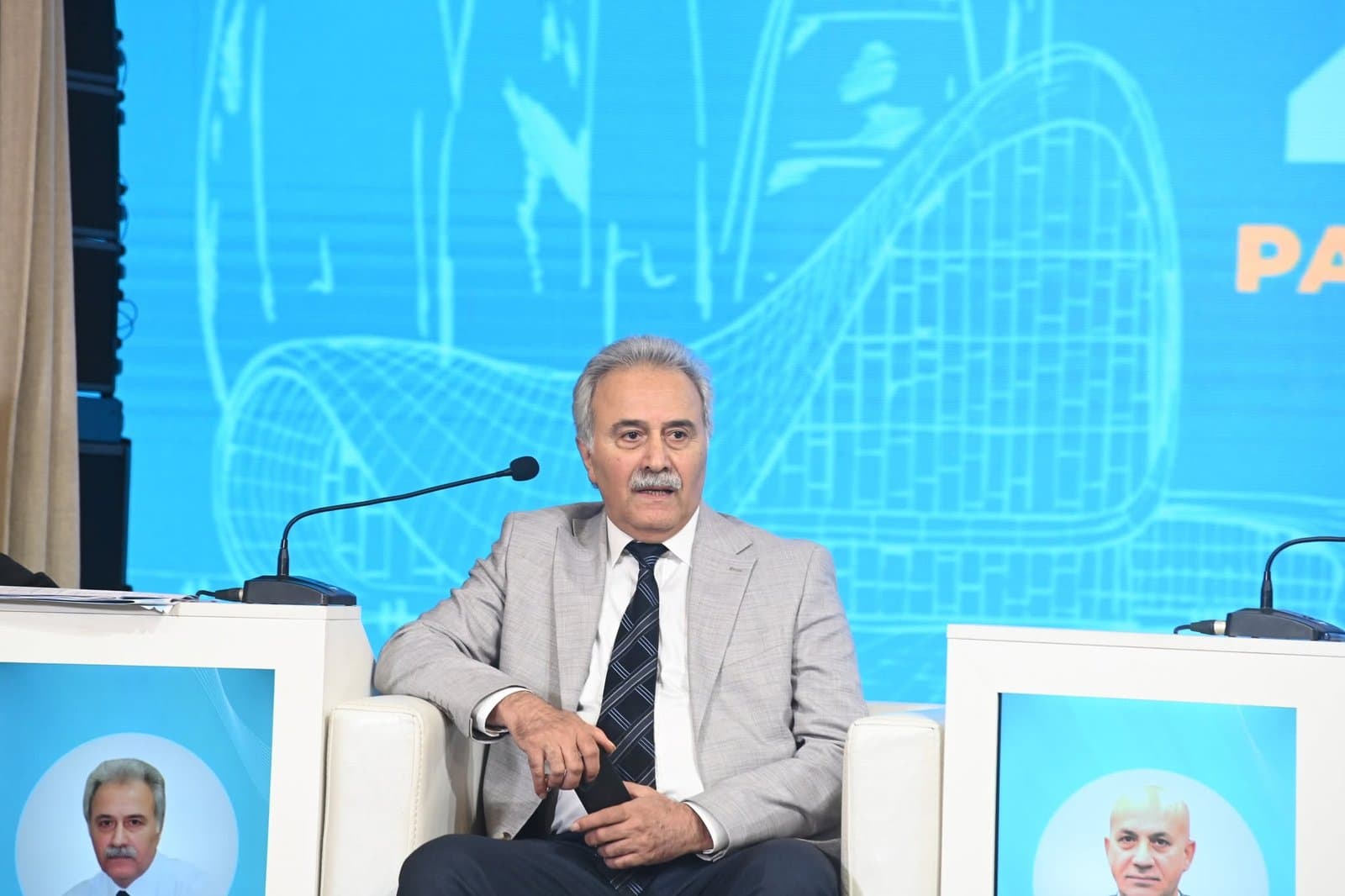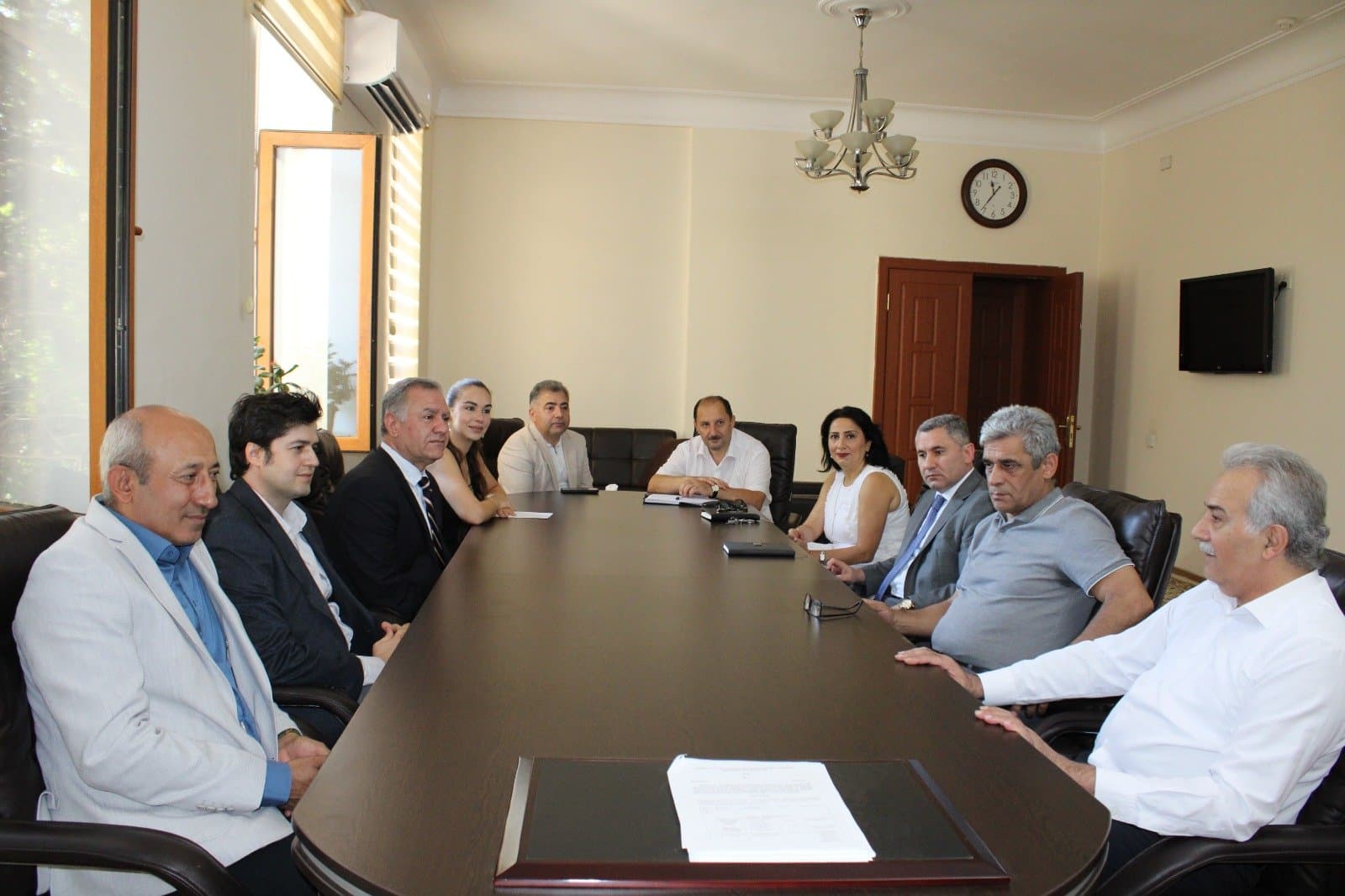


On February 12, 2021, Director of the Institute of Economics of ANAS, Professor Nazim Muzaffarli received a group of Russian journalists, and gave an interview to Alexei Naumov, Deputy of head of department of “Kommersant” newspaper, Natalia Portyakova, journalist of “Izvestia” newspaper and Gleb Mishutin an employee of “Vedomosti” newspaper
N.Muzaffarli gave brief information to Russian correspondents on the complex measures taken by the President and the Government of Azerbaijan to restore the liberated territories, as well as the activities of working groups acting under the Interdepartmental Center. He noted that the Analytical Working Group, which he is a member is currently conducting systematic empirical research in the field of effective organization of repatriation of IDP’s to Karabakh. These studies will serve as a kind of reference point in planning post-conflict rehabilitation, as the main task facing all rehabilitation work, including the reconstruction of life support systems and physical infrastructure, for creating conditions for a comfortable and prosperous life for people returning to the liberated areas.
Answering questions about the cost of restoration and reconstruction, N.Muzaffarli said that the amount of costs, along with the other factors, depends on the standards set for the restoration work. “We will turn Karabakh into one of the most beautiful corners not only of Azerbaijan, also of the world!” has raised these standards to a very high level with meaningful statements. However, it should be taken into account that we are talking not only about public investment, but also about investments of local and foreign companies, funds of international financial institutions and the expenditures of Azerbaijani citizens. And do not forget that the cost of restoration will be distributed over a period of time. As a result, there is no doubt that the Azerbaijani state and society, with the participation of foreign partners, will successfully carry out restoration and reconstruction work.
Issues related to the repatriation of IDPs were the particular interest. N.Muzaffarli stressed that the goal is sustainable settlement. For this, new jobs must be created in the region, and returning people must have reliable sources of income. Complicating matters is the fact that this region, which traditionally specializes in agriculture, is currently very difficult to develop agriculturally, as arable and pasture lands are completely mined and clearing them take very longer time than the settlements. Therefore, providing repatriates, especially the “first wave” with jobs, remains one of the most pressing issues. One possible solution to these issues would be, for example, the gradual abolition of IDP status and for the first time the introduction of special benefits for returning repatriates. This is just one of the many ideas discussed in the meeting. Surely we can say that after all the discussions, will be selected the most effective version among the possible options.
N.Muzaffarli answered to a number of other questions of Russian journalists, including practical issues of repatriation and resettlement, study of IDPs' views on various issues, construction of modern life support systems and social infrastructure in the liberated regions, potential comparative advantages of the region's economy, employment, and he also commented on issues such as financing of reconstruction projects, opportunities of foreign countries participation in the recovery process.
The meeting was also attended by political scientist Farhad Mammadov, who accompanied the Russian journalists, the coordinator of the visit Fuad Asadov and the head of department of the public relations of the Institute of Economics, associate professor Mahir Zeynalov (economics.com.az).