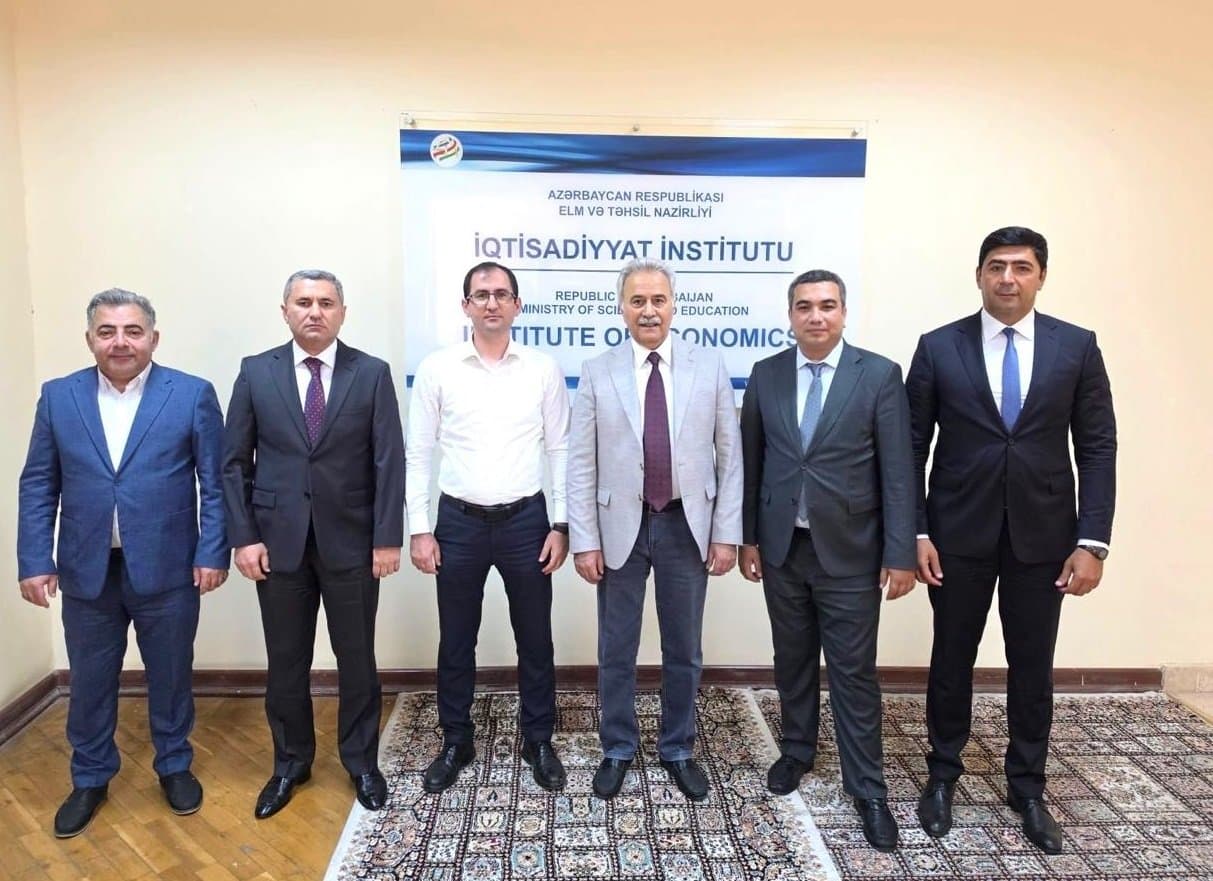


On January 18, 2021, held the first online scientific seminar at the Institute of Economics of ANAS.
Opening the seminar, the director of the Institute of Economics of ANAS, Doctor of Economics, Professor Nazim Muzaffarli spoke about the struggle of our people for independence and freedom, the people's movement of that time and the martyrs. It was noted that Black January 20 is one of the most glorious pages in the history of Azerbaijan, the martyrs of January 20 are our heroes, because they consciously joined the struggle for freedom. We must always remember this glorious history with pride ...
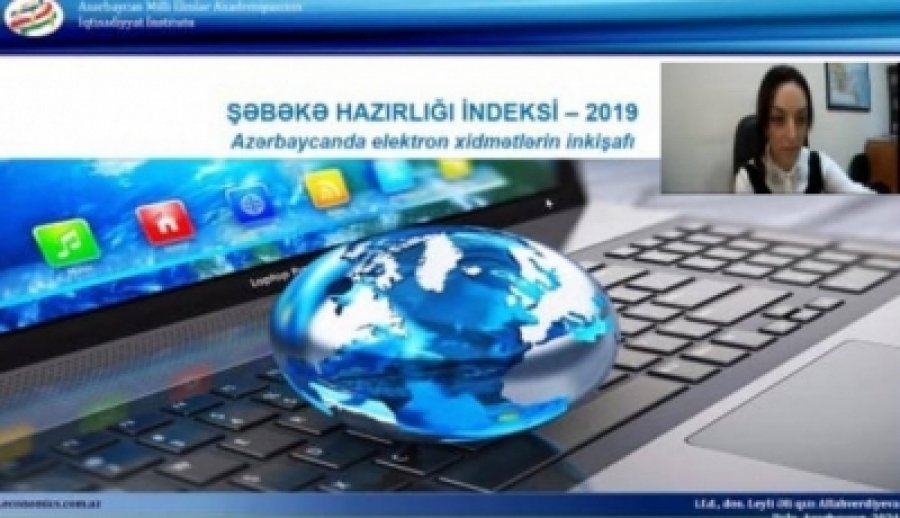
Then the Scientific Secretary of the Institute, Doctor of Philosophy in Economics, Associate Professor Leyli Allahverdiyeva made a report entitled "Network Readiness Index - 2019: Development of e-services in Azerbaijan." The report was devoted to the analysis and improvement of Azerbaijan's position in the international comparative ranking on the "Network Readiness Index". It was noted that the development of e-services depends on the availability of information and communication technologies (ICT) in the country and their accessibility. The availability of technology allows more people to use ICT. So, we can say that one of the main factors determining the development of e-services, may be the most important factor is the level of development of information and communication technologies.
Various international organizations develop various indices to reflect the level of development of ICT. One of them is the Network Readiness Index, which allows you to determine the level of ICT coverage in society in comparison with the other countries. Until 2019, the NRI was calculated by the World Economic Forum. As of 2019, the index is calculated by the Portulans Institute and the World Alliance for Information Technology and Services (WITSA) for 121 countries. In this rank, Azerbaijan is in 70th ranking. The main idea is that our future will require the integration of people and technology, their unity too. This is especially important for society and business. To ensure the effectiveness of this integration, appropriate governance mechanisms must be in place to ensure trust, security and inclusion. At the same time, the main goal is to ensure the positive impact of technology on the economy and quality of life in order to achieve sustainable development. From this point of view, the analysis of the network readiness index report clearly shows that the improvement of the indicators of most sub-indices and sub-indices used in its calculation is extremely important for each country. Countries that occupy high places in the ranking have great advantages over other countries.
The researcher believes that it is possible to predict that Azerbaijan will move forward in the ranking of a number of SRI sub-indices in the coming years. Increasing the network readiness index makes a significant contribution to overall economic development (especially if here is used per capita GDP as a criterion). However, raising the index is a necessary condition for modern economic development, but not a sufficient condition. A number of other factors also affect the level of economic development of countries. Improving the level of network readiness has a positive impact on the volume of trade, including trade in services, especially exports. This is evidenced by the analysis of the impact of FDI on the export of information and tourism services. This may be due to the specificity of the Index. The reason is that raising the level of network readiness, first of all, is one of the factors that increase the volume of services.
Then the speaker answered questions and interesting discussions were held on the topic (economics.com.az).