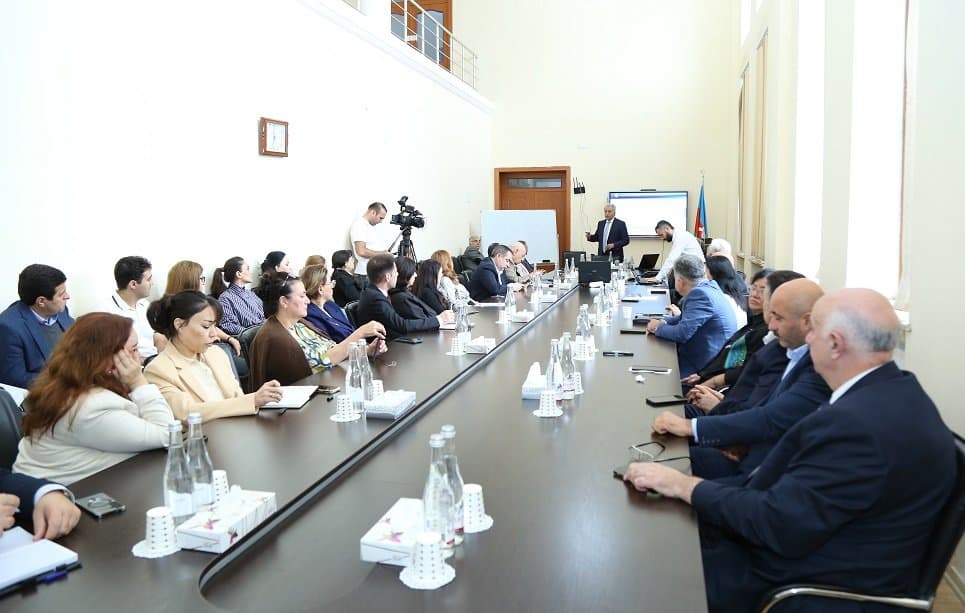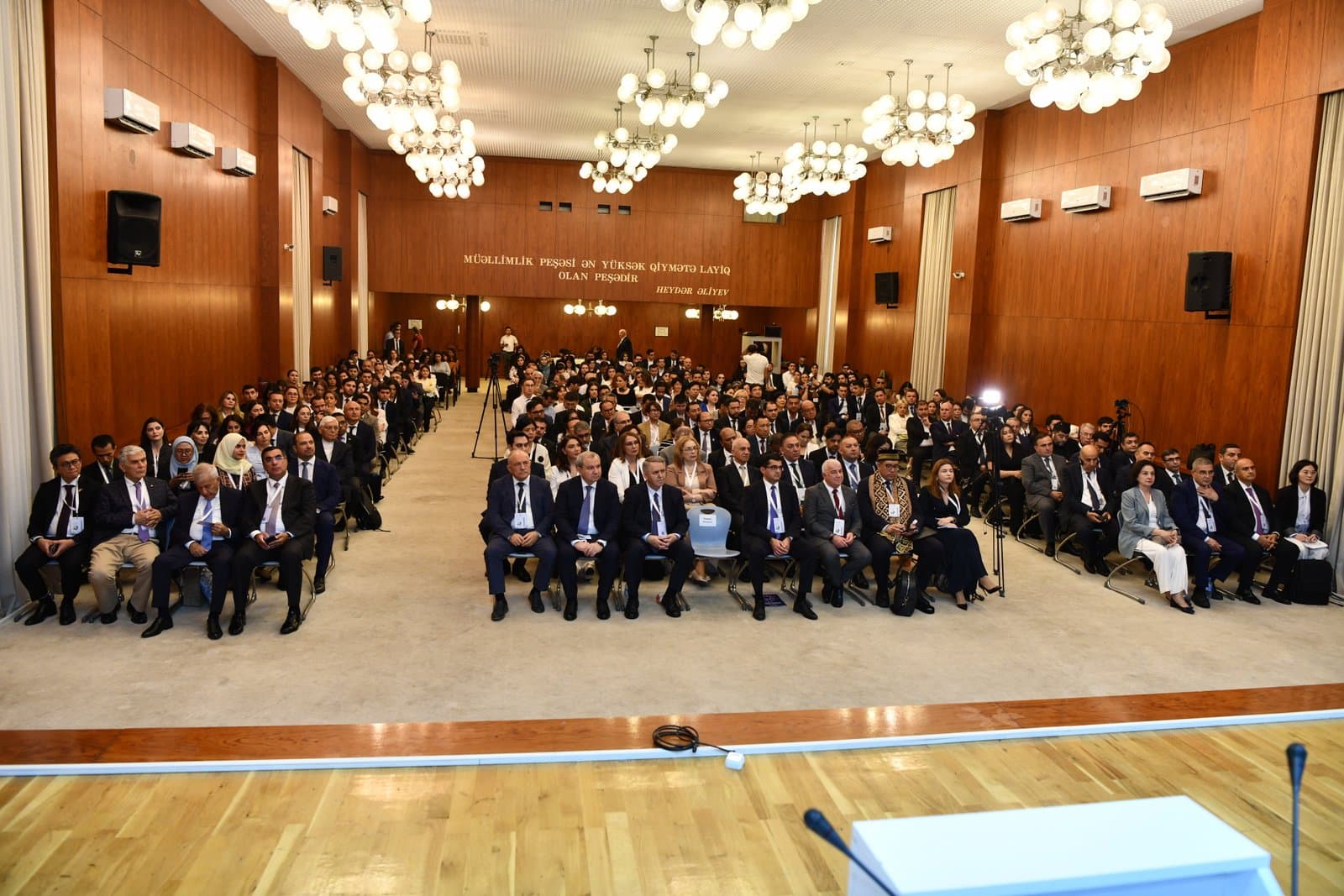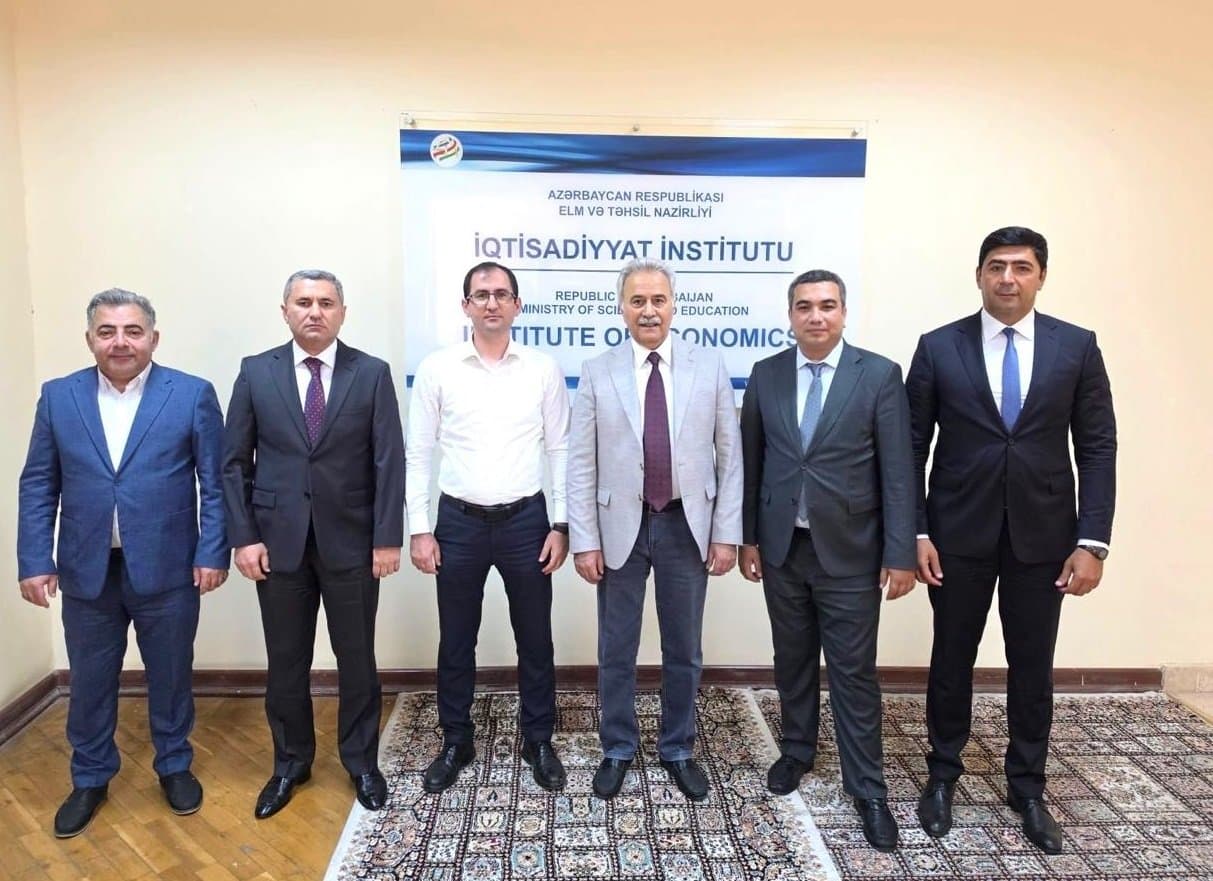


On November 7, 2019, held the next meeting of the Scientific Council of the Institute of Economics, ANAS. At the meeting discussed a number of issues, which chaired by the director of the Institute, Professor Nazim Muzaffarli Imanov. The director informed first of all about the plan of scientific research work carried out at the Institute in 2019, and the activities of creative groups created for this purpose
Later, the Deputy Director on Science of the Institute of Economics, ANAS, Ph.D. associate professor Allahyar Muradov made a report on scientific and organizational activities in 2019. It was noted that in the reporting year, at the Institute conducted research on "Socio-economic development of Azerbaijan and further improvement of its position in the international comparative rankings (2019-2021s)".
With this purpose have been created 24 working groups. The study is based on the implementation of measures on " “Enhancing the business environment in the Republic of Azerbaijan and further improving the country’s position in international ratings", approved by the Decree of the President of the Republic of Azerbaijan dated July 13, 2016. At the Institute conducts researches on 25 rankings, and 4 of them are the products of the institute. The research included suggestions and recommendations from 17 government agencies that coordinate economic and social areas.
At the Institute of Economics of ANAS, for the first time under the guidance of Professor Nazim Muzaffarli developed the Quality of Life Index (HKI) on the basis of a comparative assessment of the quality of life in economic regions, subordinate cities and administrative regions of Azerbaijan. The study covers 8 economic regions of the country and 61 republic subordinated cities and administrative districts. The quality of life of economic regions, cities and administrative regions of Azerbaijan is based on 31 indicators, grouped in 7 sub-indices. This research and in general, such inter-regional comparisons are not only helpful in addressing important scientific and theoretical issues but also assume great practical importance. Their results can be useful during making practical management decisions on socioeconomic development of the regions, including supporting the rapid economic growth in certain regions, developing social and economic programs, and allocating additional government resources for the development of different regions.
For the first time, based on a methodology developed by the Institute of Economics of ANAS, the level of liberalization and conductivity of the economy in 95 countries was evaluated by comparing the state's interventions to the economy. Based on estimated leftness (rightness) economic index calculated for individual countries five economic models have been identified and countries in the world have been classified according to these models. In the coming years the need for further liberalization of the Azerbaijani economy and the main directions of the required economic reforms are theoretically based. Theoretical findings and practical recommendations would be interesting and useful for economists and economic policy makers. In 2019, 305 scientific publications, including 2 textbooks, 10 monographs, 245 articles and etc. published by employees of the Institute. Institute’s employees made numerous presentations on various television channels, newspapers, electronic mass media, commented on the socio-economic processes in the country, including actively participated in the promotion of economic reforms led by President Ilham Aliyev.
During the year on the scientific discussion platform of "Creative economy" at the Institute of Economics listened to the reports on various topics and held discussions. Representatives of government agencies also participated in such discussions on the socio-economic development of the country.
This year, international relations have expanded, employees have participated in various international and local conferences. At the Institute held republican conferences and seminars too. At the Institute has 118 researchers, including 16 doctors of sciences, 45 doctors of philosophy and 57 scientific workers (economics.com.az).