


Senior scientific worker of the Institute of Economics of Azerbaijan National Academy of Sciences, PhD in Economics, Nasimi Ahmadov: Promoting energy connectivity between the countries within the framework of Belt and Road Initiative will be advantageous for their development.
As we have reported, from the 5th until the 18th in November, 2017, has been held “1st International Seminar on Belt and Road Initiative with Global Energy Interconnection Development” in Beijing, China, hosted by the Silk Road Institute of the Chinese Academy of Social Sciences and the Institute of Quantitative and Technical Economics of the Chinese Academy of Social Sciences, and supported by International Energy Forum. Senior scientific worker of the Institute of Economics of Azerbaijan National Academy of Sciences, PhD in Economics, Nasimi Ahmadov has also participated in the event. In his interview to "economics.com.az", N.Ahmadov shared his impressions of the visit.
-What was the main purpose of the event?
-The Chinese economy, international energy cooperation, global energy governance and other related industries were discussed at the seminar. The main program of the event included lectures and discussions, visits to related companies and local governments. The main objective of the seminar has been to strengthen the discussion on the development of global energy relations to promote a green, clean and economical friendly way to meet the global power demand. International energy cooperation is one of the most important parts of the Belt and Road Initiative and one of the key issues for driving energy revolution. Promoting energy connectivity between the countries within the framework of Belt and Road Initiative will be advantageous for their development.
-What were the topical issues discussed at the seminar?
-The official opening ceremony of the seminar was held on November 6. 2017, Prof. Li Ping, Director-General of the Institute of 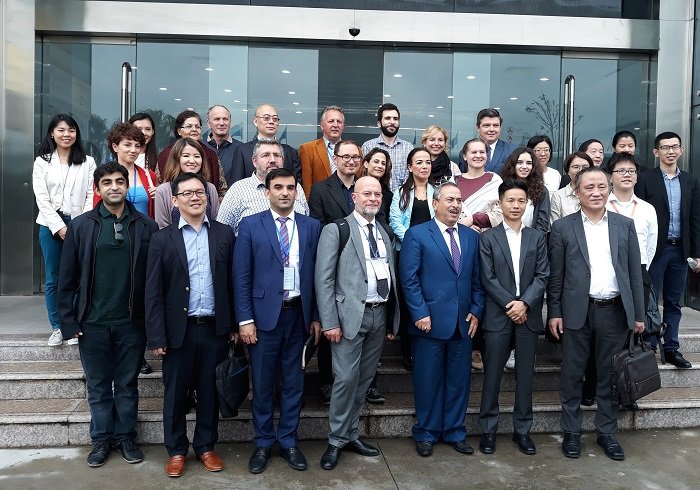 Quantitative and Technical Economics of the Chinese Social Sciences Academy (CASS), Prof. Fang Cai, Associate President of CASS, Mr. Jiping Li, Executive Director of China Association for the Promotion of Development Financing, former Deputy President of China Development Bank, Mr. Yuanbing Zhou, Associated Director of the Global Energy Interconnection Research Institute and Global Energy Interconnection Development and Cooperation Organization, made a speech.
From the 6th until the 9th in November, 2017, have been delivered lectures by Prof. Li Ping, Director-General of the Institute of Quantitative and Technical Economics of the Chinese Academy of Social Sciences, Mr. Jiping Li, Executive Director of China Association for the Promotion of Development Financing, Former Deputy President of China Development Bank, Prof. Zhou Fan, Dean of Culture Development Institute at Communication University of China, Dr. Pey Wang, Head of Research, Deputy General Manager of Research and Strategy Department of China International Petrochemical Company, Mr. C.P. Patrick Ho, Deputy Chairman and Secretary General of China Energy Fund Committee, Professor Zhaoguang Hu, Former chief economist of the Institute of Energy Economics, State Grid of China, and Prof. Jian Liu, at the Energy Research Institute of the National Development and Reform Commission. The lectures covered topics such as "China's Economic Development Prospects and Chinese Manufacturing – 2025”, "The Belt and Road Initiative Infrastructure and Connectivity”, "Smart Technology and creative industries", "Asia-Pacific and Chinese Oil Market", "Global Energy Cooperation with connectivity", "Power and smart energy", "Intelligent Transportation System and Clean Energy Vehicles".
-What aspects of China's modern economic development have attracted your attention?
-It had been reporting in the speeches that China is one of the main players in the global energy market. At present, world oil demand shifts to Asian markets. China's economy is dependent on oil and gas resources to a certain extent. Oil imports have increased in recent years. This country is trying to increase the use of renewable energy (wind, sun, hydro). But the oil industry hampers the development of alternative energy in electric motor vehicles. The lecturers noted that the principle of "one state - two sistems" has been successfully implementing in China, and the important features of the socialism ideology with Chinese characteristics in the new era are that it is people oriented, and aimed at protecting and improvment people's livelihood. This country has become the second largest economy in the world. At the same time, now China faces contradiction between unbalanced and inadequate development and the people's ever-growing needs for a better life.
The energy revolution is the transformation of the energy sector in China. According to the strategy, the share of fuel not extracted in China will increase by 15% by 2020 and 20% by 2030, the emissions of all coal-fired power stations should be at ultra low level by 2030 as their old capacity is retired. The energy intensity of GDP will be reduced by 15%, the volume of coal used will be reduced by 15%, the share of all extracted energy resources will be reduced by more than 50% and China's energy system should be provided with advanced energy technologies and equipment by 2050.
-Have you expressed your attitude to the issues discussed?
- I had closely been involving in the discussions and exchanging ideas about the problems being investigated. I noted that energy resources, which are within of all kinds of natural resources, spreaded wide in various parts of the territory in Azerbaijan, have always exceptional importance from the development point of view of the country. In the years of independence the opportunities have been created in order to overcome the differences in the level of socio-economic development in the regions of country, to ensure a balance between Absheron economic region and other regions for the purpose of a sustainable and competitive economy. The Strategic road maps for the national economy and main economic sectors, which have already been adopted and implementing in the country, show that oil and gas factors and prices are one of the global trends that will affect the economic development of Azerbaijani economy in the medium and long-term perspective, it is also noted that the oil factor has significant influence on the achieved macroeconomic stability and welfare. All this indicate that transformation of the capital-based model into productivity-efficiency-based growth model is essential in our country. The country is expected to transfer from a efficiency-based model to a innovation-based model by 2025. This requires the use of energy resources efficiently and optimally in order to ensure sustainable and inclusive development of the national economy.
I think that cooperation with China in the field of energy, especially in the field of renewable energy usage, can benefit our country. At present, China has reduced costs by its achievements in technology and efficiency as the world's largest producer of solar and wind energy.
- What impressions have China's cities, nature, and people made on you?
- China is a country with ancient history, rich culture. China's cities are growing rapidly. The geographical proximity of Beijing city and its surroundings to Japan and South Korea is evident in technology, electronics. We have also been in the Great Wall of China, which is among Seven Wonders of the World, in the Forbidden City - the world's largest palace complex in Beijing, at the well-preserved architectural complex of Ming and Qing dynasty, with 268 ancient houses called "Three Lanes and Seven Alleys" in the center of Fuzhou.
The Chinese are affable, smiling people. The nature of the country is quite diverse. Chinese cuisine is also very rich. Sichuan cuisine is famous for its peppered and spicy dishes.
- What other interesting aspects of the international event have you remembered?
- On November 10, we got acquainted with the "751Culture and Innovation Park" in Beijing. This creative cluster has closely integrated its industrial resources with technology, fashion, art, and so on. We also visited the Zhengdong Group South Power Generation Management Center. On the same day, Yu Yiksin, the academician of the Chinese Academy of Engineering, professor of Tianjin University, delivered a lecture on "Energy revolution and distributed energy" at the Institute of Quantitative and Technical Economics of the Chinese Academy of Social Sciences.
On November 11-12, 2017, we traveled to Tianjin and visited Sino-Singapore Tianjin Eco-City Service Center and Solar Power Plant. Sino-Singapore Tianjin Eco-City is a result of a collaborative agreement between the governments of China and Singapore for the development of a socially harmonious, environmentally-friendly and resource-conserving city. Lower and lower-middle income strata of society will be able to get a home, the elderly and mobility-impaired will be able to move comfortable, people will go to public social and recreational facilities easily in the Eco-city. Transportation will mainly consist of light rail, supplemented by a secondary network of trams and buses, which will less pollute the air. There are 26 Key Performance Indicators for this city, at least 90% of the trips should be via no engine (bicycle, pedestrian) and public transport in the Eco-city, and the share of renewable energy (geothermal, hydro, solar) in energy consumption should not be less than 15% by 2020. The total capacity of the solar station is 5.44 MW. In 2014, it has produced 4.6 million kilowatt hours, and in 2016 - 5.5 million kilowatt-hours of electricity. There are 22 inverters and 11 converters in the station.
On November 13, PhD Hong Shen at the Global Energy Interconnection
Development and Cooperation Organization, delivered a lecture on the topic "Development and Practice of Ultra High Voltage Grid in China" in Beijing.
On November 14, 2017, we went from Beijing to Fuzhou city, situated in the south-eastern part of China. The city's development projects were presented at the Fujian Planning Exhibition Hall. On November 15, we carried out research on Fuqing Zeqi Wind Park, where energy-producing wind turbines are located. General Manager Chen Xiu Ling said the park has 24 turbines, each with a 2MW capacity. The average wind speed is 5.8 meters per second, the cost of each kilowatt of electricity is 9,000 yuan, the cost per kilowatt hour is 0.5 yuan, return on investment is 8.8%. The park's activities are supported by the government, surrounding areas are powered by energy. Particular attention has paid to avoiding damage to the environment. Villages are located 2 km from here.
Then we got acquainted with the Fuyao Glass Industry Group, which was founded in 1987. It is a large multinational company specializing in the manufacture of automobile safety glass and industrial technical glass. Fuyao Group has grown into one of the world's largest automobile glass suppliers, with its products recognized and purchased by the world's top automobile manufacturers, such as Bentley, Mercedes-Benz, BMW, Audi, GM, Toyota, Volkswagen, Ford, and Chrysler. We saw the products and observed the process of glass production. Natural gas and electricity are used in production. The cost of each linear meter of the glass is 0.54 yuan, the volume of gas consumed per 1 linear kilometer is 0.3 billion cubic meters.
On November 16, 2017, we met with Mr. Lin Fey, a member of the Standing Committee at the Fuzhou Municipal People's Government, Executive Deputy Mayor, and Mr. Guo Jian Guo, Deputy Secretary. We then conducted a study at the CAS (Fuzhou) Digital Industrial Park. We have gained detailed information at the meeting with Mr. Jack Cao, General Manager, and Mr. Eco Bien, Branding Director. It is a scientific industry integrated service provider which sets research and application of big data, industrial incubation, investment and financing in one complex.
- What else would you say about the event?
- The event had been organized at a high level and was very useful. Therefore, I would like to express my deep gratitude and appreciation to the Institute of Quantitative and Technical Economics of the Chinese Academy of Social Sciences, Prof. Li Ping, Director-General, Ms. Donghong Chen, Associate Director, Prof. Liu Qiang, Head of Energy Division, Ms. Rui Wang, Programme Officer, the Silk Road Institute of the Chinese Social Sciences Academy and the International Energy Forum. Many thanks are also due to the other representatives whom I contacted, whose names are not mentioned here. Participants from China, Singapore, Turkey, Bosnia and Herzegovina, Croatia, Slovenia, Poland, Israel, Jordan, Morocco, Belarus, Italy, Romania, Pakistan and Kazakhstan attended the seminar. At the closing ceremony we were given international certificates. Participators from both China and other countries are keenly interested in cooperating with us. Such events bring countries and nations closer together and create favorable conditions for mutually beneficial cooperation in the future.
-Thank you very much for the interview! (economics.com.az)

CHINA IS INTERESTED IN COOPERATION WITH AZERBAIJAN
LATEST NEWS
2026-10-07
Professor Nazim Muzaffarli made a Presentation at the Standing Scientific Seminar
2026-09-23
Scientists of the Institute of Economics Participated in the “UI GreenMetric World University Rankings: 2026 Results and Award Ceremony” at ASOIU
2026-09-22
Researchers from Uzbekistan and Turkey visited the Institute of Economics

