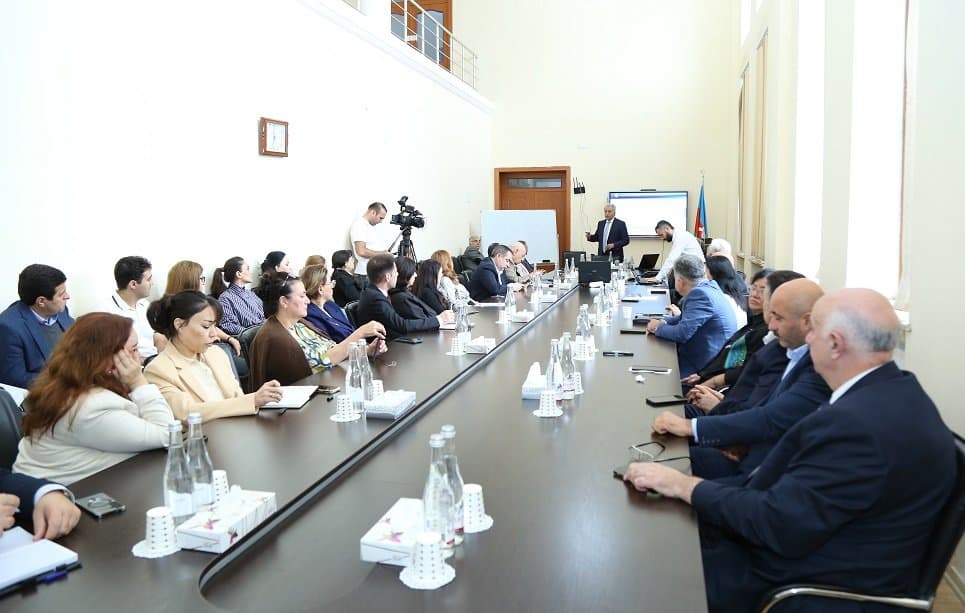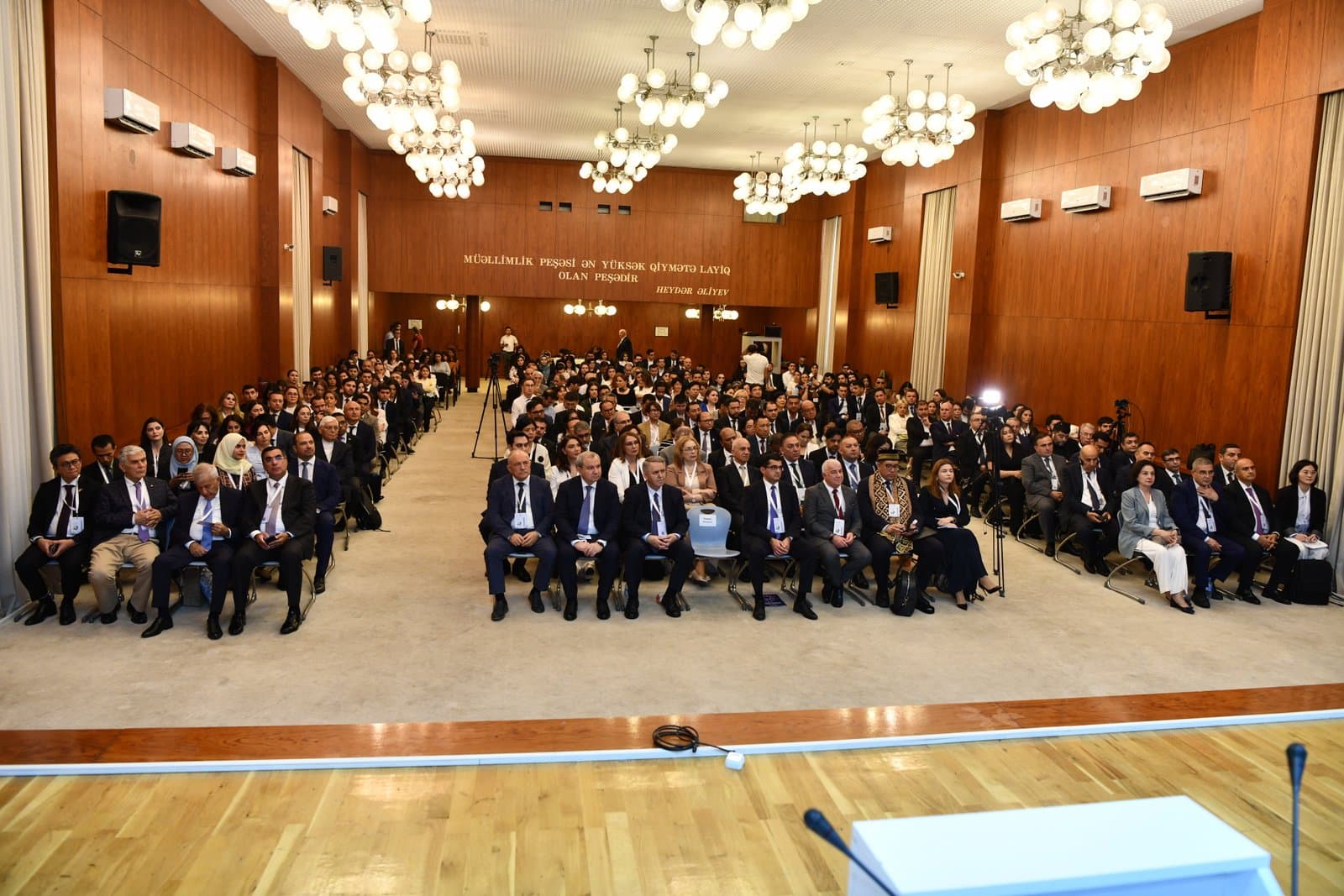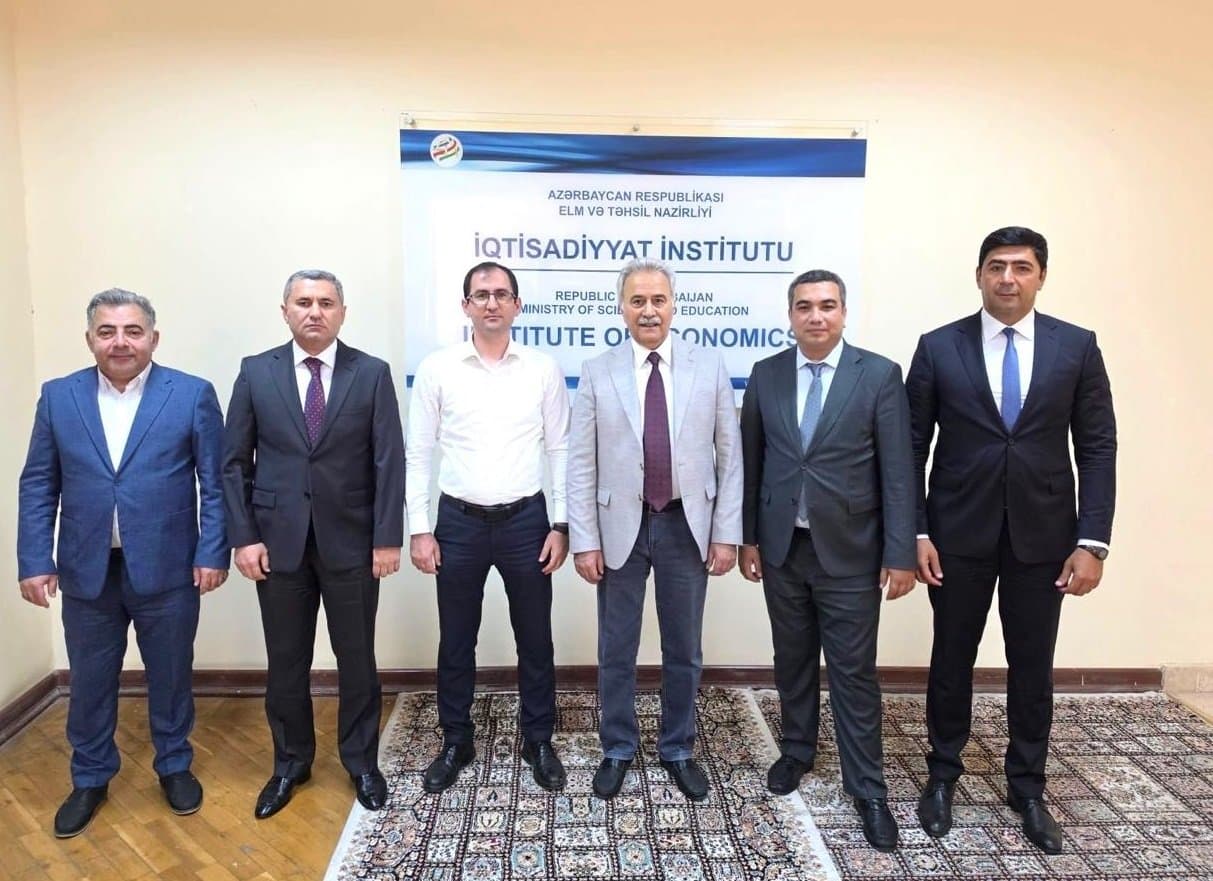


Held the next meeting of the Council of Young Scientists and Specialists at the Institute of Economics of the Ministry of Science and Education on June 10, 2026. The event, chaired by the Chairman of the Council of Young Scientists and Specialists of the Institute, Doctor of Philosophy in Economics Elnur Zeynalov, discussed topical scientific issues related to the social and cultural factors of economic development.
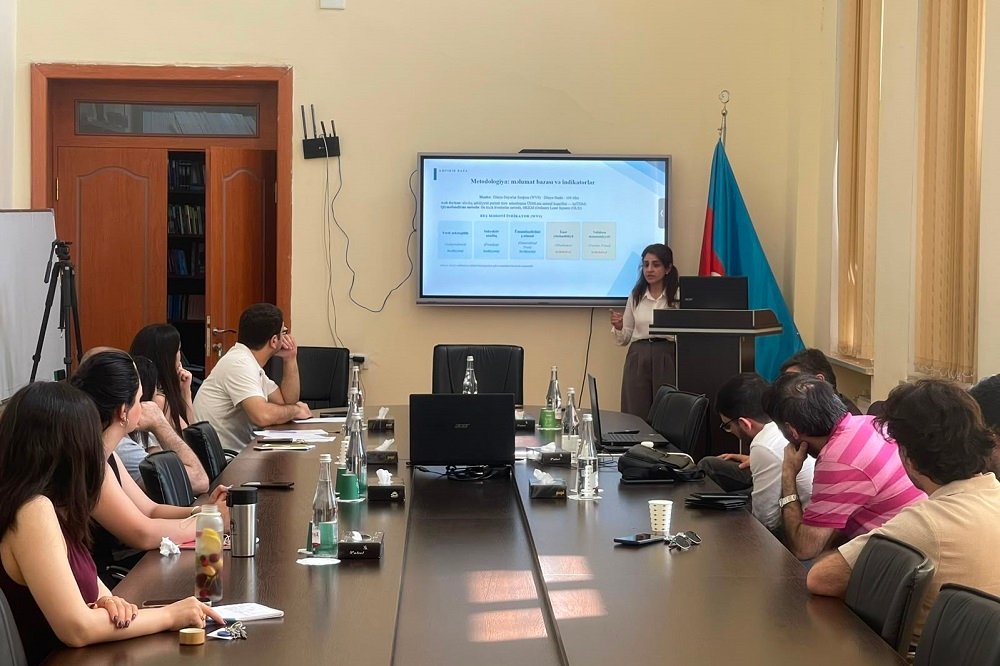
At the meeting, Aysel Ashirli, a scientific researcher at the department of "Theoretical Foundations of Economic Policy", made a presentation on "Assessing the Impact of Moral Values on Economic Development." In her report, the young researcher analyzed the impact of moral and cultural values, especially the collectivism-individualism dimension, on economic development processes based on theoretical and empirical approaches.
In the presentation noted that the impact of moral values on economic development is not direct, but mainly manifested through indirect mechanisms such as the formation of social capital, the quality of the institutional environment, the level of trust, and the potential for innovation. It was noted that a high level of mutual trust and a culture of cooperation in society not only increases the efficiency of economic activity, but also creates a favorable basis for sustainable development.
The report also focused on the role of the institutional environment in the interaction between cultural values and economic outcomes. In this context, discussed the phenomenon of "similar value - different outcome", and were explained the reasons why the same or similar moral values give rise to different economic outcomes in different countries on scientific grounds.
During the event, the participants had a wide exchange of views on the topic. Young scientists and experts asked questions about the provisions made in the presentation and shared their views on the importance of taking moral values into account in economic development models. During the discussions, a number of proposals and recommendations were made regarding the further expansion of this direction in future scientific research and the in-depth study of the role of social and cultural factors in the formation of economic policy.
It should be noted that the meetings of the Council of Young Scientists and Specialists, which are regularly organized at the Institute of Economics, play an important role in promoting the scientific activities of young researchers, discussing current economic problems, and formulating new scientific approaches. Such events contribute to the expansion of the exchange of scientific knowledge and experience, including the development of the research potential of young scientists (economics.org.az).