

Professor Nazim Muzaffarli: “Honesty is not rashness, it means closeness to God!”
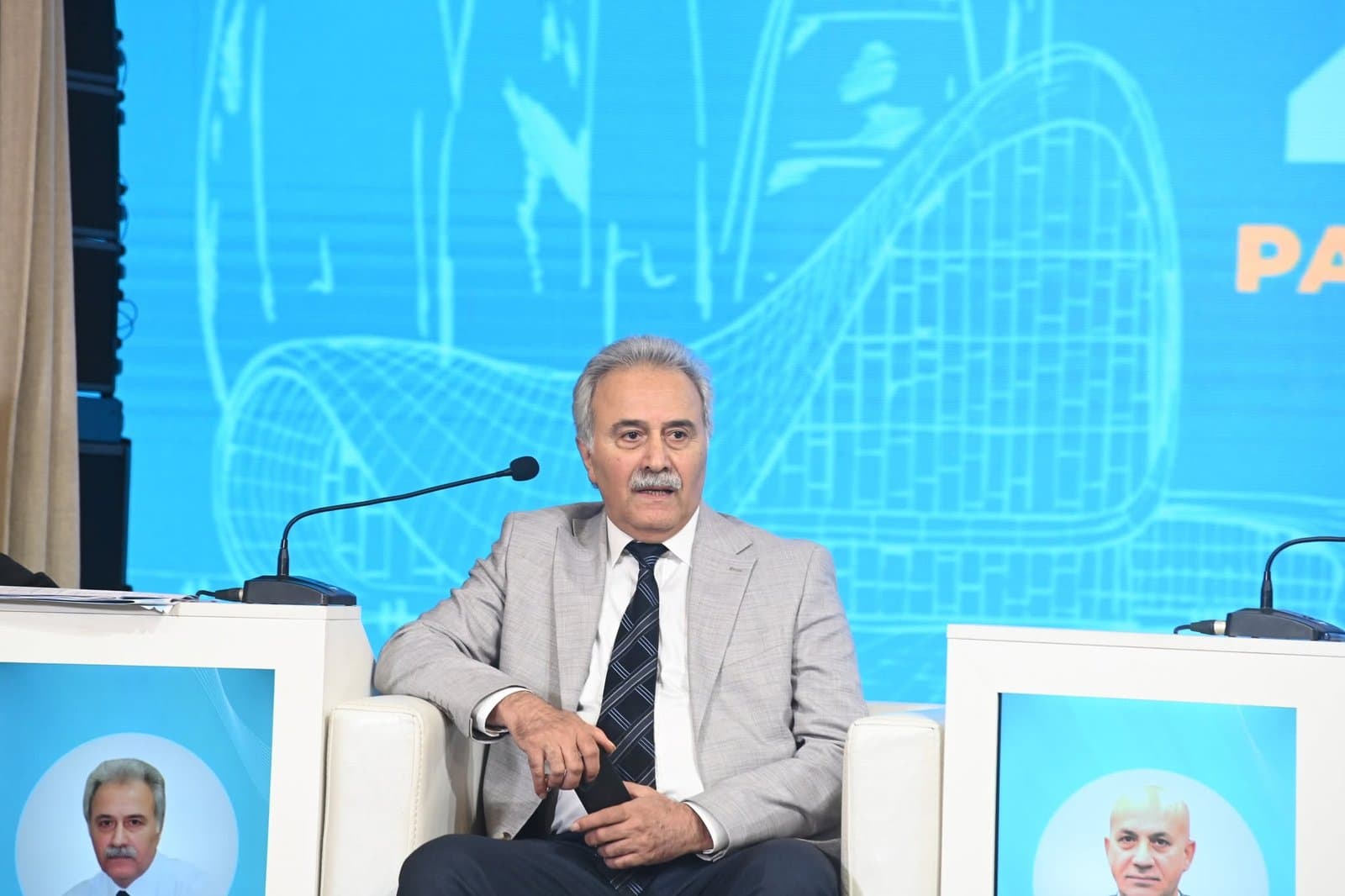
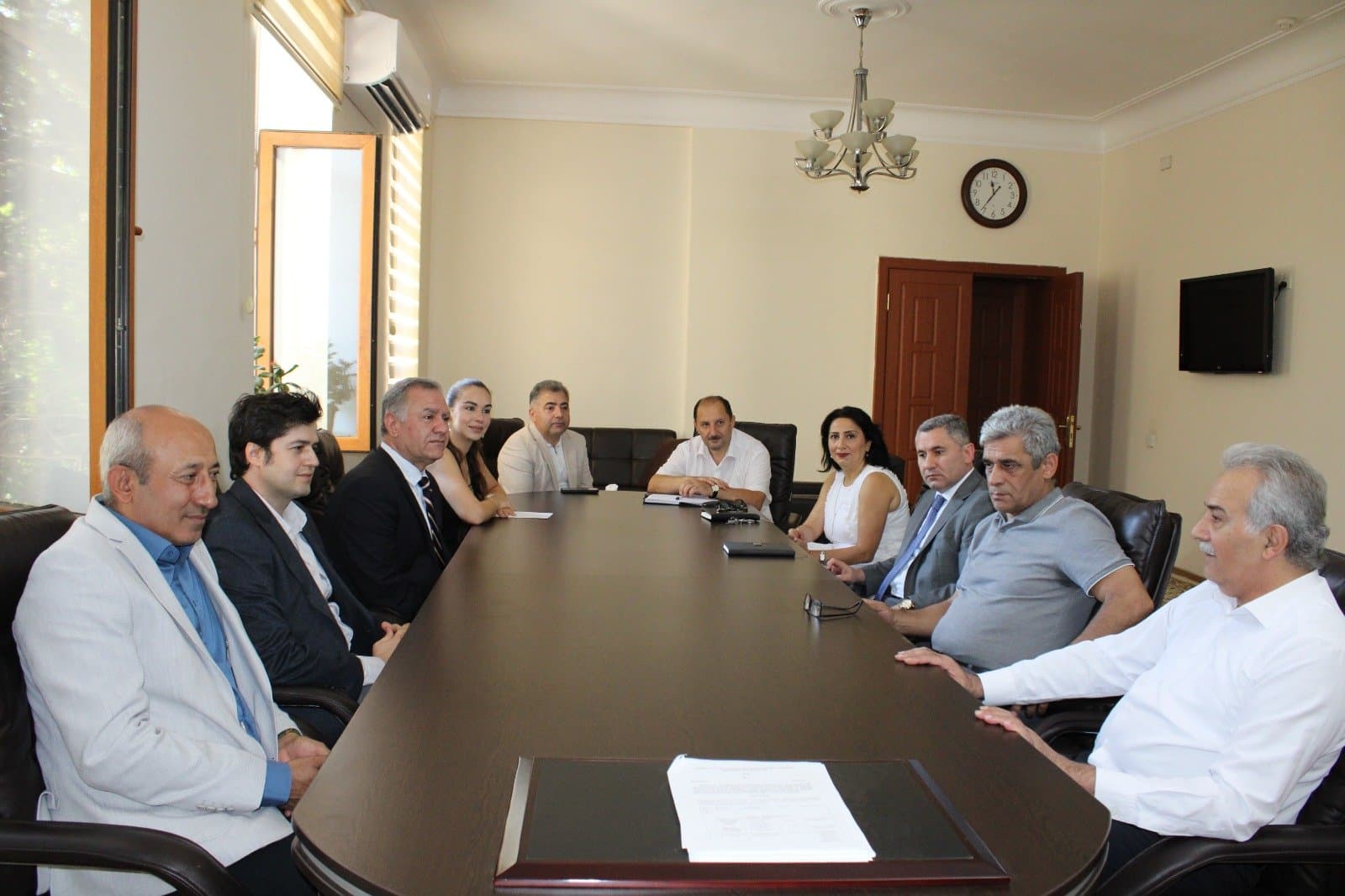
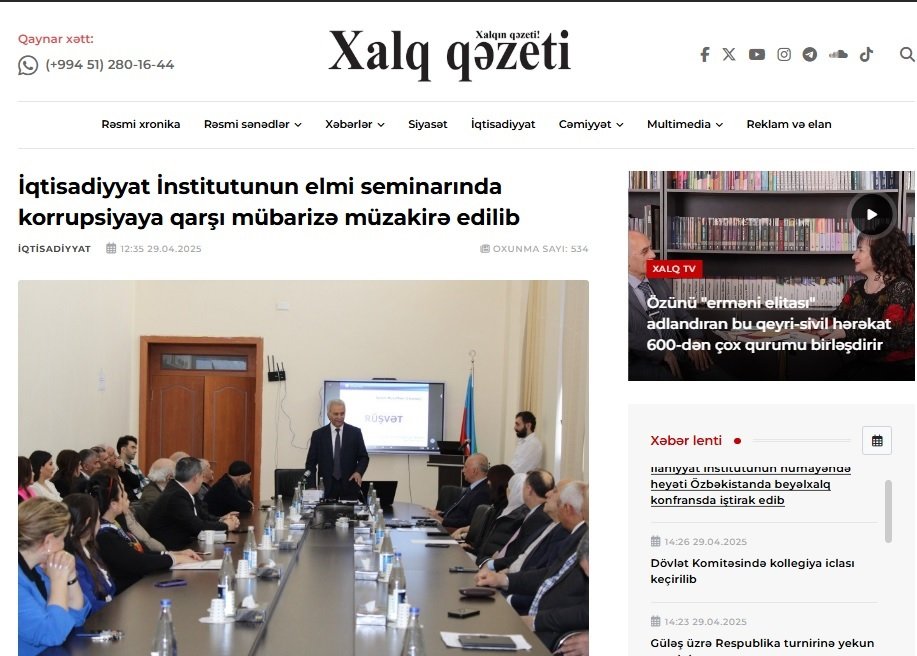
On April 28, 2025, held a traditional Scientific Seminar at the Institute of Economics of the Ministry of Science and Education. The Director of the Institute, Prof. Nazim Muzaffarli, made a report on the implementation of “National Action Plan for Strengthening the Fight against Corruption for 2022-2026” approved by the Order of the President of the Republic of Azerbaijan dated April 4, 2022, within the framework of the implementation of “Education on the Fight against Corruption” item of the work plan approved by the order of the Minister of Science and Education Emin Amrullayev.
The seminar was attended by representatives of the country's leading universities and a number of state institutions, including employees of the Ministry of Economy, the State Tax Service, the Ministry of Science and Education, the Higher Attestation Commission under the President of the Republic of Azerbaijan, the DOST agency, the Chamber of Auditors, the Center for Analysis of Economic Reforms and Communication, UNEC, ASOIU, Karabakh University, Sumgayit State University, Azerbaijan University of Architecture and Construction, Azerbaijan Technical University, and Azerbaijan Cooperation University.
It was noted that the fight against corruption and bribery is a topical issue in Azerbaijan, and the public considers it a serious problem. It is true that corruption exists in all countries, but the issue is its scale, its scope.
Speaking about the essence, types, characteristics, and even positive aspects of corruption, the professor attributed the main negative consequences of bribery to its economic development, especially its "strangulation" of the private sector, the outflow of financial resources abroad, the weakening of the flow of foreign investment into the country (in the non-oil sector), unfair social polarization, the deformation of the system of public values, and etc., also characterized budget theft (both at the collection and expenditure stages) as the most ugly form of corruption, like eating orphan goods, getting into the pockets of everyone who lives at the expense of state funds (soldiers, scientists, teachers).
N. Muzaffarli, classifying bribery by types, distinguished compensatory bribery (taking bribes for what the market should or cannot provide), classic bribery (bribery taken in exchange for a service rendered), bribery for an accomplice (interest determined in exchange for a service rendered), and extortionate bribery (bribery "extorted" by force). In his opinion, in order to effectively combat corruption and bribery, it is necessary to know their "anatomy" and evaluate them through scientific research, because the fight methods against the various forms are different.
For example, repressive methods are not effective in the fight against compensatory bribery, here economic reforms are more important. These reforms should be aimed at ensuring that more and more people's income is determined by the market. To this end, privatization should be continued in all possible areas, private healthcare and private education should be further developed. The salaries of civil servants should be fully formalized, and the incomes of people receiving salaries at the expense of state funds should be brought closer to market requirements. The principle of "small government" should be applied more consistently and rapidly.
In the fight against the classic bribery, reducing citizens' (primarily entrepreneurs') need for officials, simplifying regulatory rules, and expanding digital government services are more effective.
N. Muzaffarli characterized the creation of conditions of public intolerance towards corruption and bribery as a universal method of combating all forms of them, noting that the position of the President of the Republic of Azerbaijan on the fight against corruption and bribery should be more widely and actively promoted, and should be more precisely taken into account in personnel appointments at all levels.
Then, held a wide-ranging discussion around the topic and answered questions. The speakers shared their views on anti-corruption measures, its economic and legal mechanisms (economics.org.az).