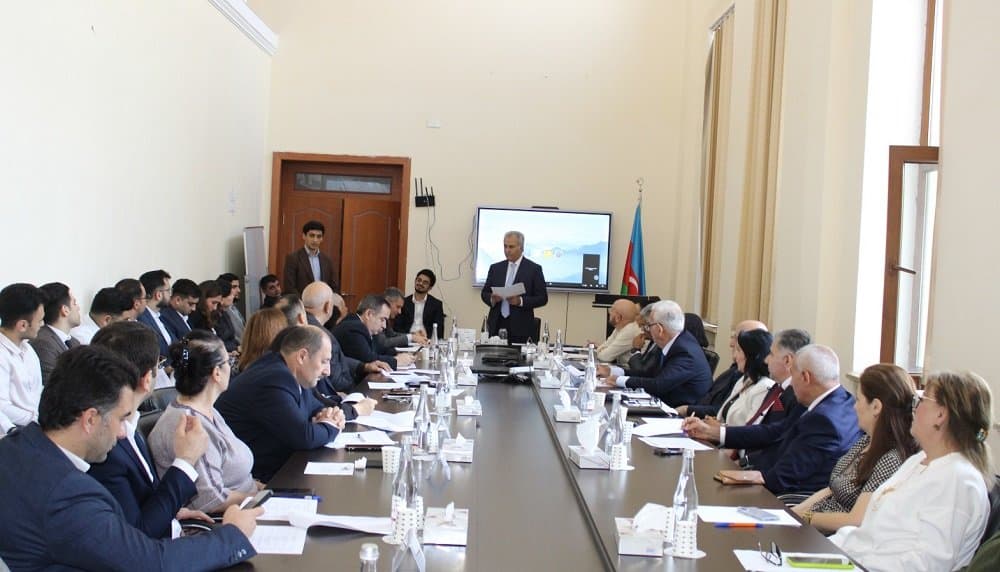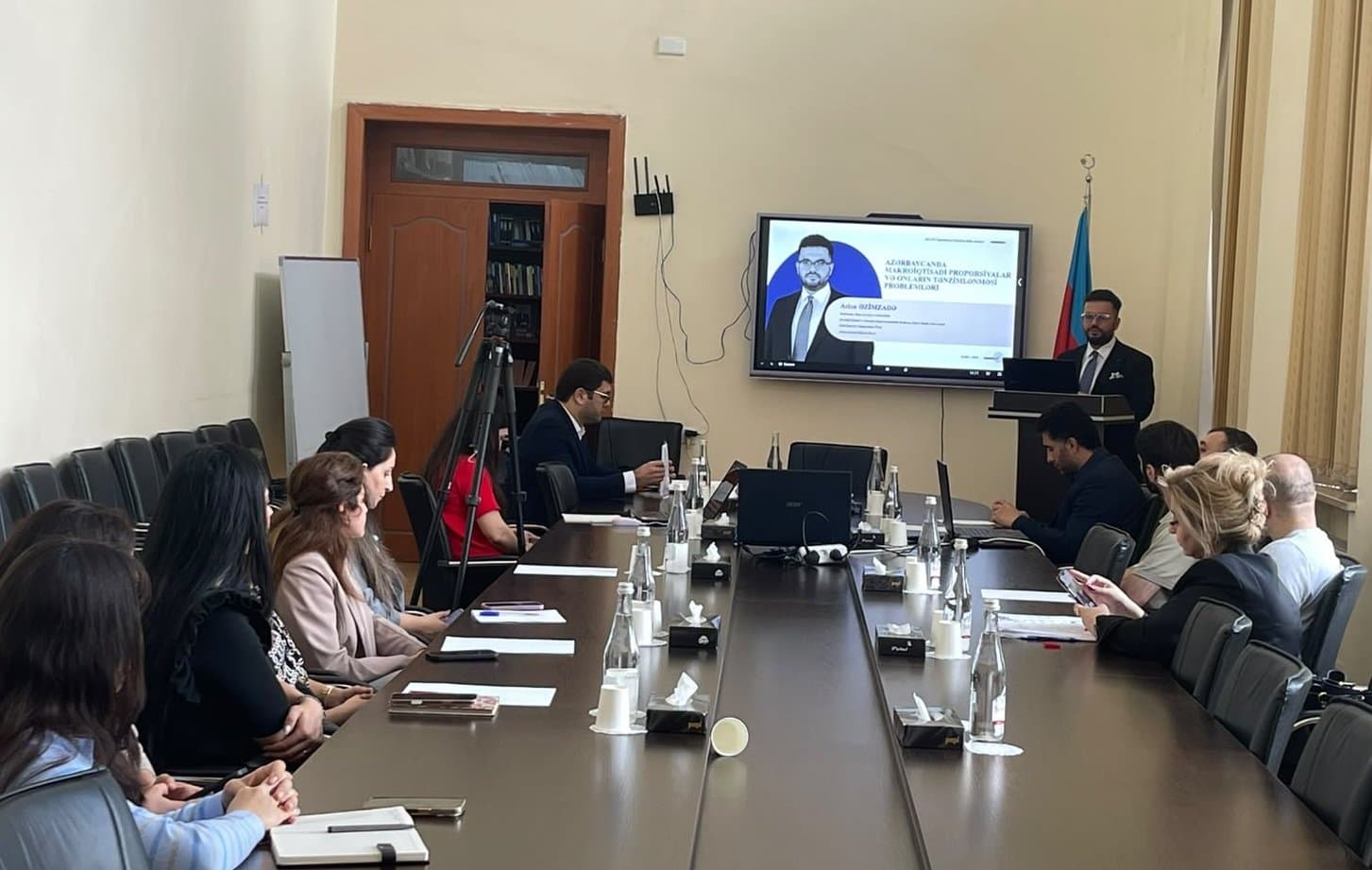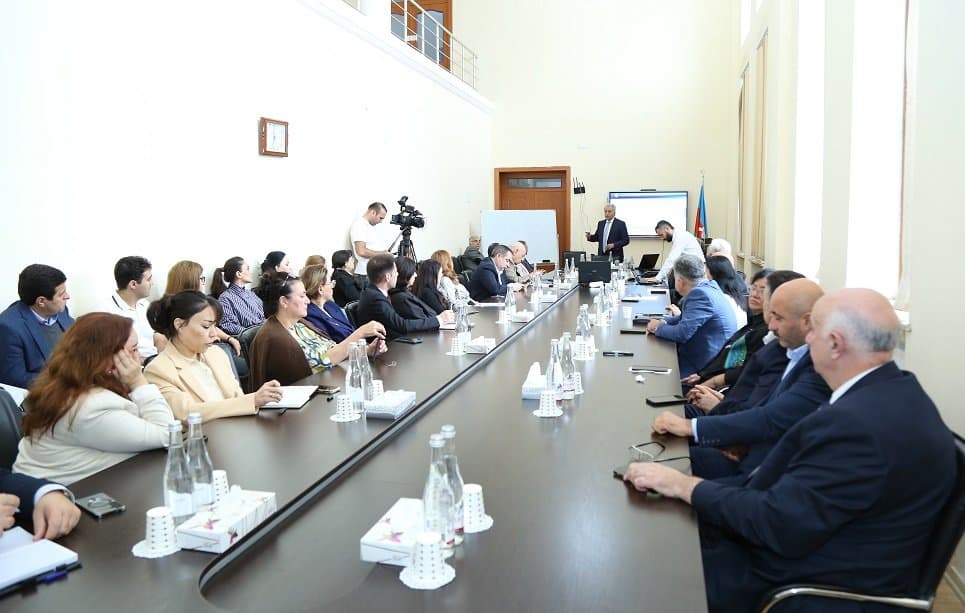


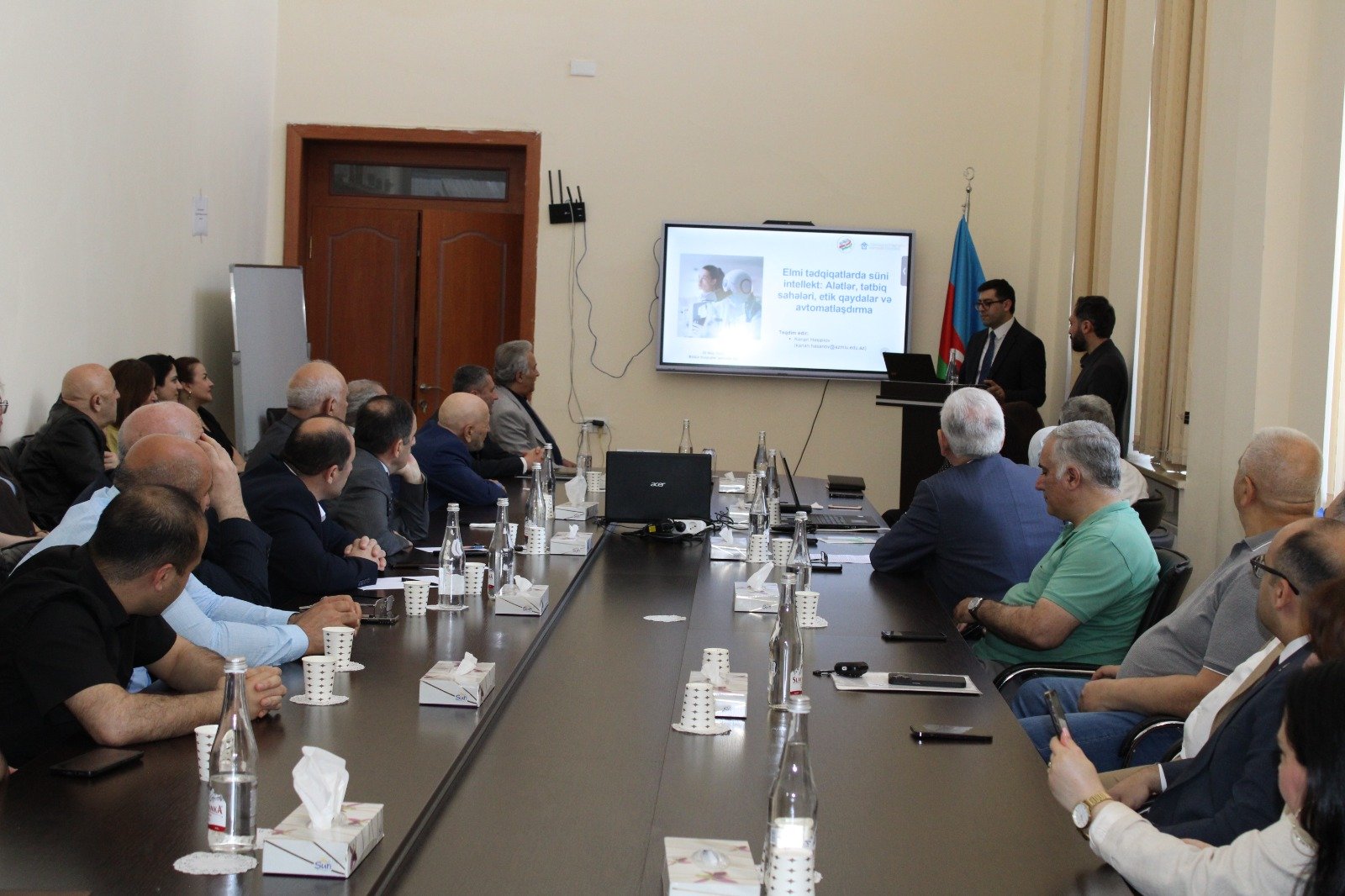
On May 26, 2026, held the next permanent scientific seminar at the Institute of Economics of the Ministry of Science and Education.
At the event, chaired by the Director General of the Institute, Professor Nazim Muzaffarli, Kenan Hasanov, Head of the Sustainable Development Center of the Azerbaijan University of Architecture and Construction, Deputy Director of ERA Research Company, and member of the ESOMAR International Society of Researchers for Azerbaijan, made a presentation on the topic “Artificial Intelligence in Scientific Research: Tools, Application Areas, Ethical Rules and Automation”.
At the seminar discussed the role of rapidly developing artificial intelligence technologies in scientific research, their application possibilities and future prospects. In his speech, the speaker provided information about the main essence and operating principles of artificial intelligence and stated that these technologies are already becoming an integral part of the research process in the world's leading scientific and academic centers.
Kenan Hasanov spoke in detail about the main artificial intelligence platforms used in scientific research, their functional capabilities and application mechanisms. He noted that artificial intelligence tools create significant advantages for researchers in data processing, statistical analysis, text preparation, structuring scientific articles, database management and automation of various analytical processes.
During the presentation, along with the positive aspects of using artificial intelligence, possible risks and ethical issues were also touched upon. It was stated that when using artificial intelligence, special attention should be paid to data security, copyright, academic integrity and reliability of results. In this regard, the participants were provided with extensive information about the ethical rules and security principles applied in international practice.
At the seminar also discussed current trends in the use of artificial intelligence technologies in the world, as well as innovations in this field. It was noted that in the context of digital transformation, the adoption of artificial intelligence tools and their integration into scientific activities is of great importance in terms of improving the quality of research.
After the presentation, numerous questions from the participants were answered, and held a wide exchange of views on the topic. The seminar participants shared their views on the impact of artificial intelligence on scientific activity and its future development prospects (economics.org.az).