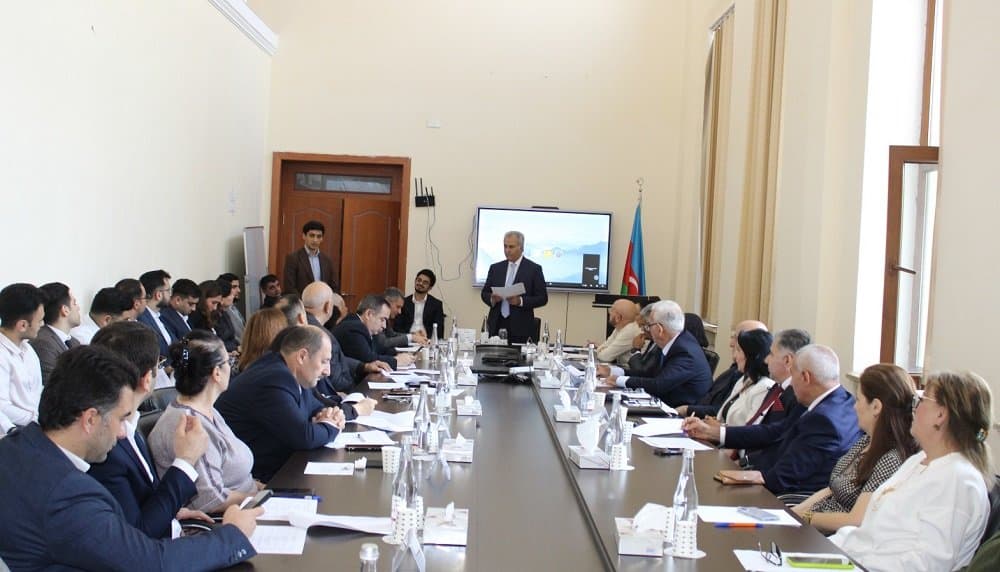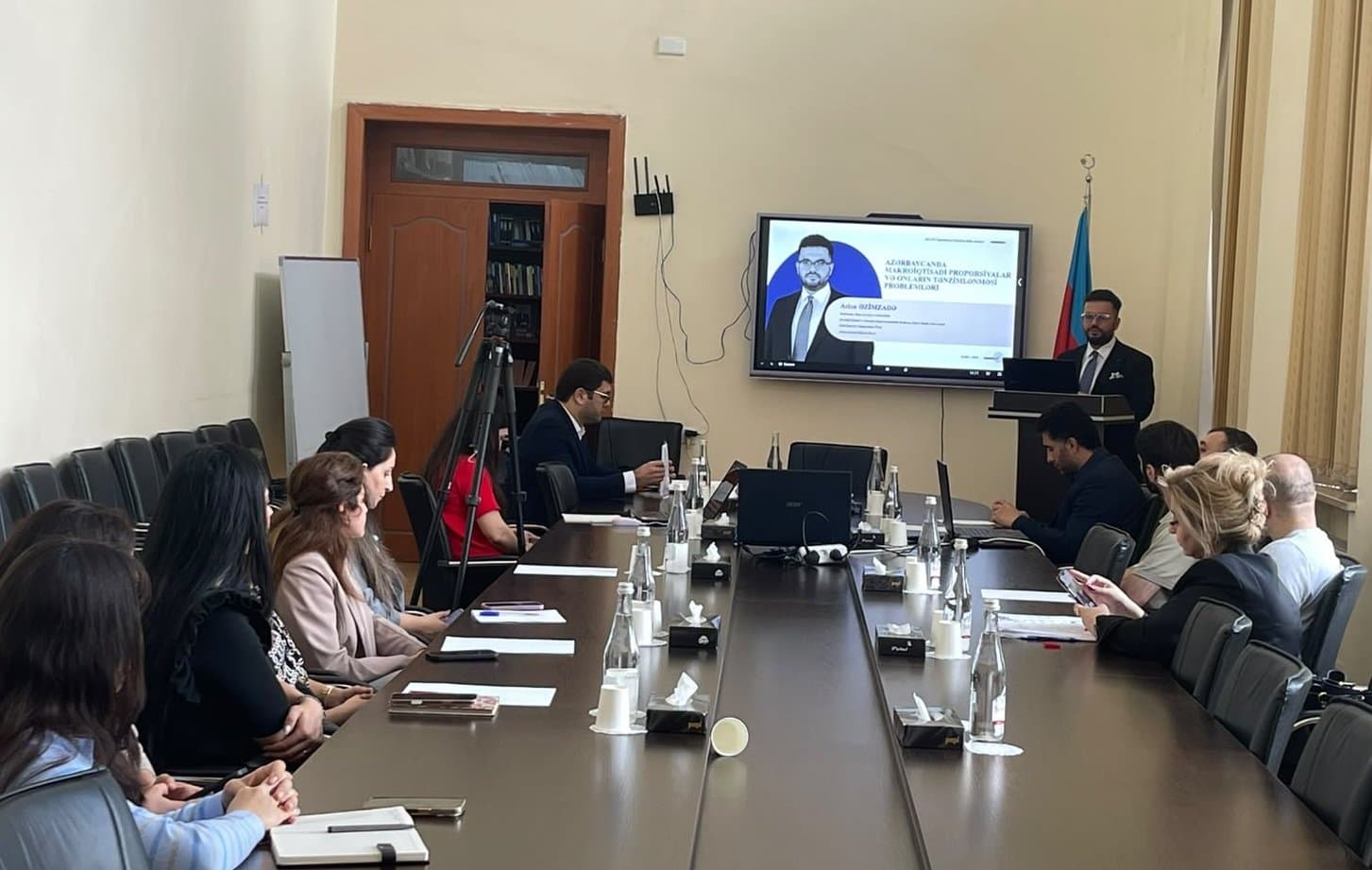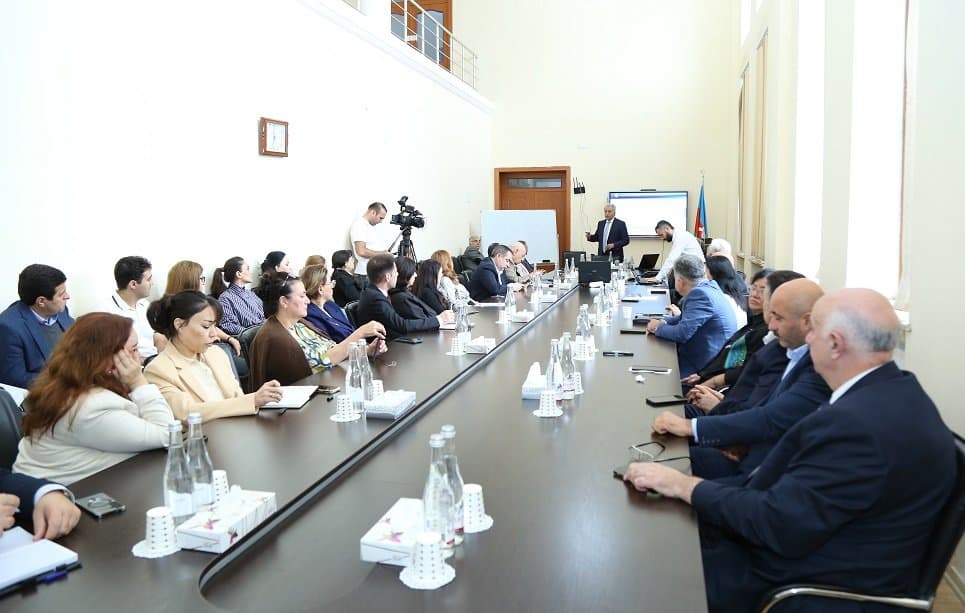


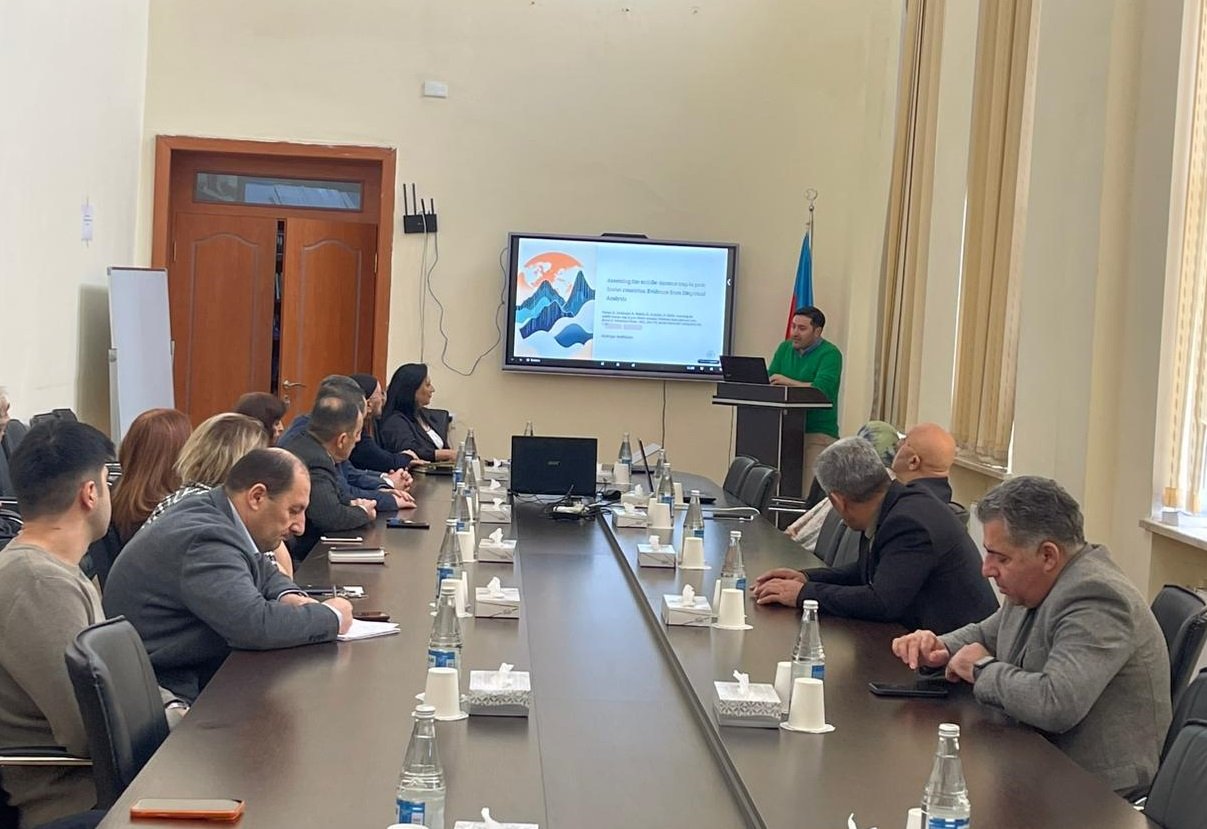
On January 6, 2026, held the permanent scientific seminar of the Institute of Economics MSE. At the seminar, chaired by the head of the department of the institute, Professor Rasmiyya Abdullayeva, Shahriyar Mukhtarov Professor of the Vistula University in Poland and the University of Korea (South Korea), made a presentation on "Assessment of the existence of the middle-income trap in post-Soviet countries: empirical evidences."
The speaker said that the World Bank is conducting research on the middle-income trap in various countries around the world. It mainly examines countries that have fallen into the "middle-income trap." According to this concept, a lower-income country moves to a relatively high level of per capita national income, but remains stuck at that point. They cannot compete with countries with a high level of development in the field of creating innovative products and services. There are 34 countries, such as South Korea, that have overcome this trap. There were two factors that ensured the transition of these countries from a middle-income country to a high-income country: they moved from investment-based growth to innovation-based growth and they managed to ensure the perfection of the structure of the economy. This is the development of higher education, science, innovations and high technologies, competitive human capital and their effective application in the economy.
Prof. Sh. Mukhtarov spoke about the reasons why countries fall into the "middle income trap", the numerous factors affecting it, as well as the main problems and ways to get out of this trap. He analyzed the main factors affecting the incomes of individual countries and development trends. According to the researcher, for development that increases incomes, the institutional and innovation environment in the country is important also should be formed the scientific potential that will create innovation, and an innovation-based industry.
Then, questions were answered and held extensive discussions on the topic (economics.org.az).