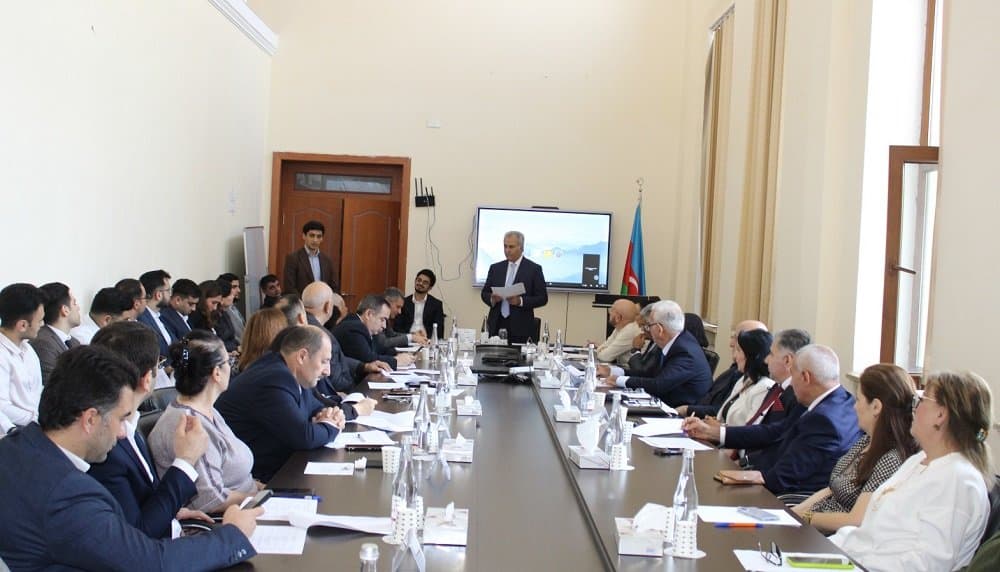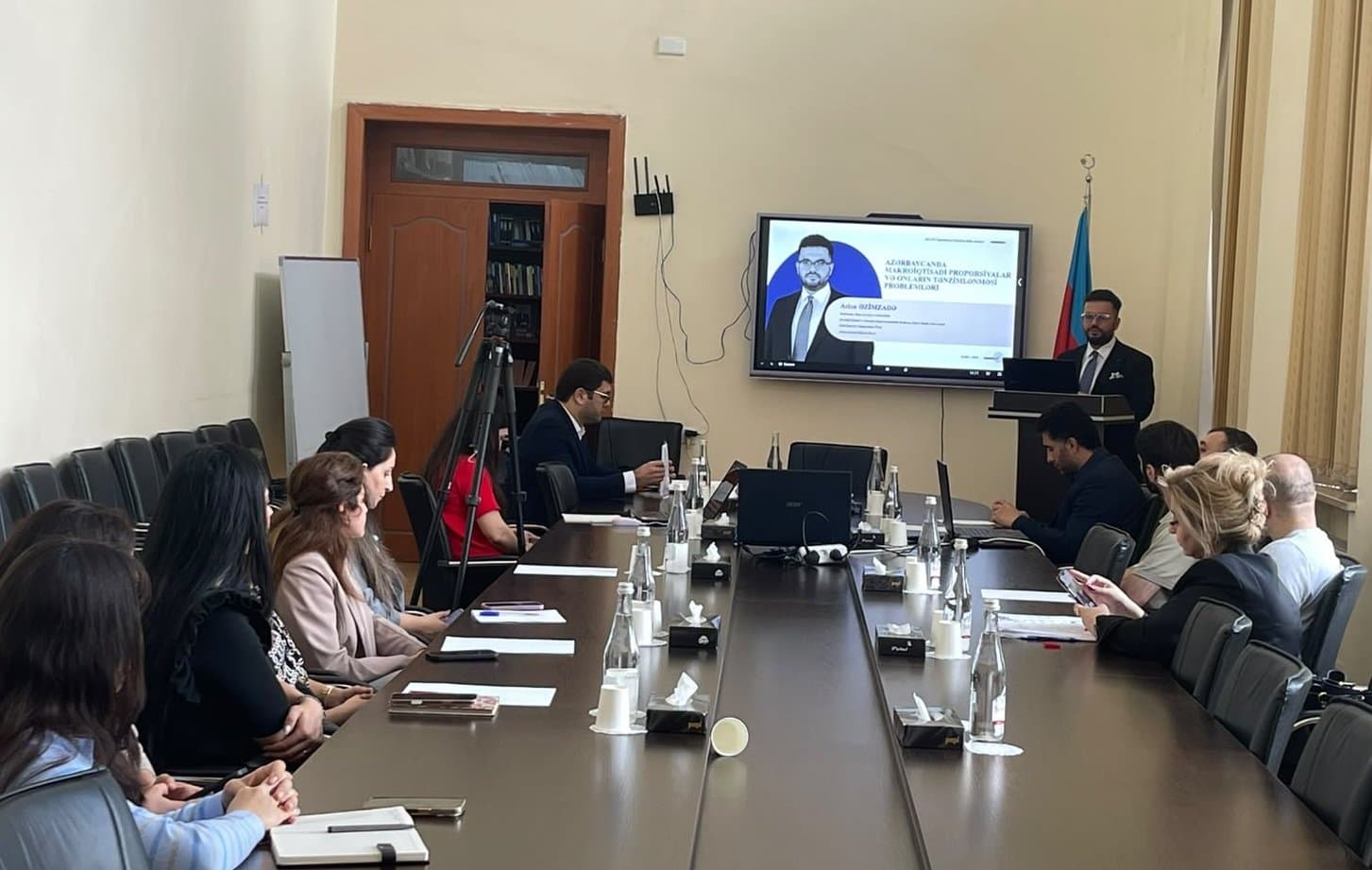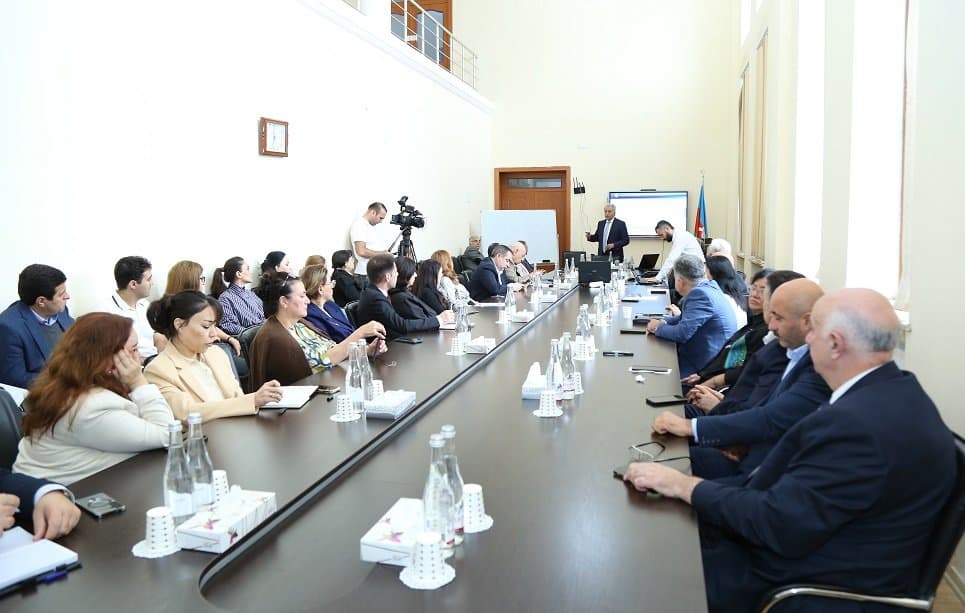


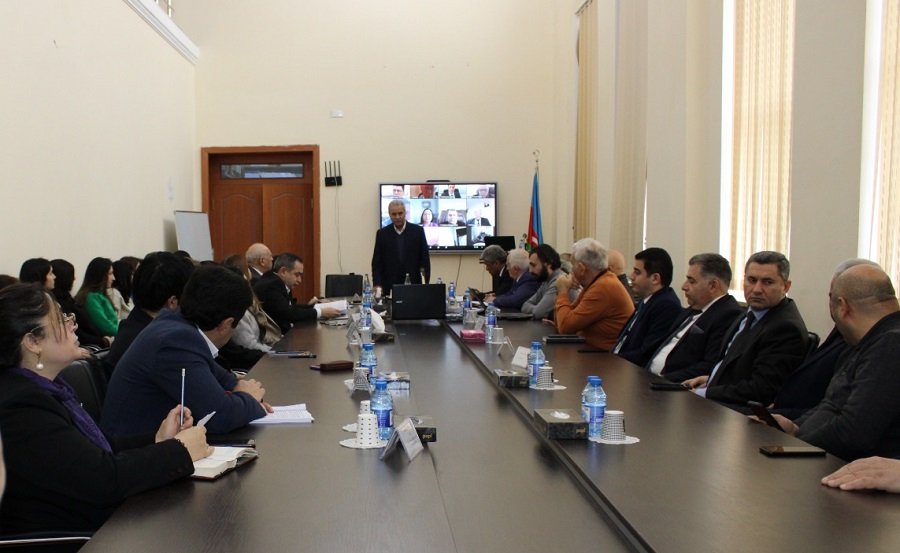
On January 27, 2025, held a traditional scientific seminar at the Institute of Economics of the Ministry of Science and Education
The meeting, chaired by the Director General of the Institute of Economics, Professor Nazim Muzaffarli, held online and attended by employees of government agencies - the Ministry of Economy of the Republic of Azerbaijan, the State Statistical Committee, Tokat Gaziosmanpasha University in Turkey and Istanbul Commerce University, also leading higher education institutions of our country - Karabakh State University from Khankendi, UNEC, Baku State University, Sumgayit State University, Baku Business University, Mingachevir State University, Azerbaijan University of Architecture and Construction, and etc.
At the seminar, the Head of the Department of Innovative Economy and Digital Transformation of the Institute of Economics, Doctor of Philosophy, Associate Professor Allahyar Muradov delivered a report on "State Regulation of Prices: Cross-Country Comparative Analysis and Results for Azerbaijan."
He stated that this research was carried out at the MSE Institute of Economics under the leadership of Prof. N. Muzaffarli on the order of the Ministry of Finance of the Republic of Azerbaijan. The research is one of the first scientific works on the measurement and comparative analysis on the level of state intervention in prices.
Thus, these measurements were carried out on the basis of a new methodology developed by the Institute of Economics on 129 countries. Currently, Azerbaijan is ranked 68th among 129 countries in terms of the severity of general intervention in prices, and 23rd in the group of high-middle-income countries to which it belongs. Price regulation in Azerbaijan is more liberal than in all post-Soviet republics, except for the Baltic states.
Price regulation in Azerbaijan is more liberal than in all post-Soviet republics, with the exception of the Baltic states. The authors of the study believe that there is potential for price liberalization in our country, and that liberalization would have a positive impact on the economy. The overall impression emerging from the assessment for Azerbaijan is that reducing direct and indirect price interventions in the near and medium term should be a priority for economic policy in the country.
In previous periods, the relative rigidity of general price regulation in Azerbaijan was higher. However, the change in the situation is not due to any liberal reforms in the field of price regulation in Azerbaijan. The reason is that in recent years, due to extreme economic and especially political conditions, intervention in the economy, including prices, has sharply increased in most countries, while in Azerbaijan it has remained largely stable (unchanged). As a result, those countries have moved up in the ranking of conductors, and compared to them, prices in Azerbaijan are now more liberal.
A. Muradov said that in the study, the degree of state intervention in prices in different countries was measured and analyzed on the basis of fuzzy logic. Measurements were carried out in two formats - on direct interventions and on the general level of intervention. On this basis, two new indicators were calculated - the index of direct state intervention in prices and the index of the general level of state intervention in prices. The methodological approaches applied in both cases are original and developed by the authors. Based on the results obtained, appropriate ratings were compiled, and the socio-economic impacts of price intervention were separately examined.
The authors hope that their proposals for a certain degree of liberalization of pricing in Azerbaijan will be useful in preparing decisions on price regulation by state agencies.
Then, held extensive discussions on the topic and answered questions (economics.org.az).