

Azerbaijan’s economy is gradually shifting towards a more diversified growth model, with the non-oil and gas sector increasingly helping to offset declining activity in the traditional energy industry. However, sustaining this momentum will require stronger non-oil exports, greater private investment, higher productivity and improved competitiveness. At the same time, the restructuring of global trade routes, the development of the Middle Corridor and the reconstruction of Karabakh and East Zangezur are creating new economic opportunities for the country.
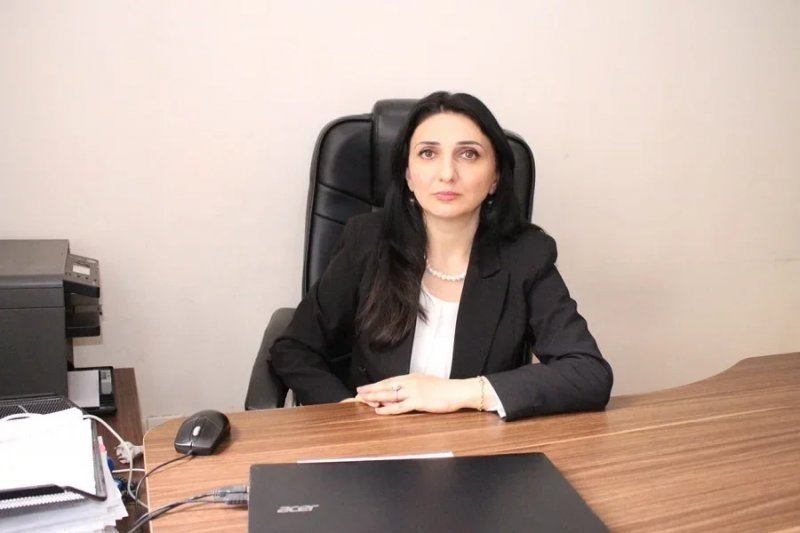
In this interview with News.Az, Ellada Khankishiyeva, PhD in Economics and Head of the Education Department at the Institute of Economics under Azerbaijan’s Ministry of Science and Education, examines the prospects for Azerbaijan’s economic diversification, the potential for expanding cooperation with Central Asia, Türkiye, the European Union and China, and the role of digital technologies in shaping the country’s future growth. She also discusses whether the current pace of non-oil development is sufficient to ensure sustainable economic progress and what challenges Azerbaijan must overcome to strengthen its position in the regional and global economy.
– Azerbaijan’s GDP grew by 1.7% in January–October 2026. At the same time, the oil and gas sector contracted by 0.9%, while the non-oil and gas sector expanded by 2.9%. What does this trend indicate, and is the growth rate of the non-oil sector sufficient to sustain the country’s overall economic development?
– Azerbaijan’s economic performance in January–October 2026 points to the gradually increasing role of the non-oil and gas sector in GDP formation. This indicates that non-oil industries have already become an important factor in maintaining macroeconomic stability and are, to some extent, offsetting the decline in activity in the traditional energy sector. Particularly noteworthy is the performance of non-oil manufacturing, where output increased by 4.8%, transport and warehousing services grew by 10.2%, and information and communication services expanded by 9.9%.
Undoubtedly, the positive performance of the non-oil and gas sector is an important achievement. However, an economy pursuing deep diversification, higher labour productivity and expanded export capacity requires stronger and, above all, sustainable growth. This calls for expanding non-oil exports, encouraging private investment, developing manufacturing industries, introducing modern technologies and improving the competitiveness of domestically produced goods. It is precisely these qualitative changes in the structure of production that will determine the sustainability of Azerbaijan’s economic development in the medium and long term.
 Source: westnews.az
– Can Azerbaijan already be said to be undergoing a genuine structural transition towards a non-oil-based economic model, or is the current trend primarily the result of the non-oil and gas sector increasing its share of GDP against the backdrop of declining oil and gas production?
– It is already entirely reasonable to speak of the structural transformation of Azerbaijan’s economy. However, it would be premature to describe this process as a completed transition to a non-oil-based economic model. In recent years, new areas of economic activity have emerged and expanded in the country, including non-oil manufacturing, agriculture, transport, logistics, tourism, information technology and processing industries. Consequently, the positive performance of these sectors points to a gradual broadening of the country’s economic base.
However, an objective assessment of structural transformation requires consideration of a wide range of indicators, from non-oil export performance and private investment volumes to the ability of domestic enterprises to compete in international markets. In my view, a genuine structural transition can be declared when the non-oil and gas sector becomes not only the main source of domestic value added but also an independent source of export revenues, investment and technological development. This qualitative shift should be the central objective of the country’s economic policy.
– How promising is economic cooperation between Azerbaijan and the countries of Central Asia, Türkiye, the European Union and China amid the restructuring of international trade routes?
– As global trade routes undergo significant changes, Azerbaijan’s geographical location is acquiring particular economic importance. The country has the potential to serve not merely as a transit link between Europe and Asia but also as a fully-fledged participant in emerging regional production and logistics chains.
Cooperation with Central Asian countries is particularly promising, given the expansion of industrial production, investment activity and export opportunities across the region. Kazakhstan and Uzbekistan, for example, offer considerable scope for expanding cooperation in transport and logistics, energy, agriculture, the chemical industry and raw material processing.
 Source: media.az
Türkiye, in turn, remains one of Azerbaijan’s key economic partners, underpinned by close trade, investment and industrial ties. In 2025, bilateral trade turnover with Türkiye amounted to approximately $5.72 billion, while Azerbaijan’s total trade turnover with the member states of the Organization of Turkic States exceeded $7.26 billion.
The development of economic ties with the European Union and China is equally important. The EU represents not only a major export market for Azerbaijan but also an important source of investment, advanced technologies, environmental standards and industrial expertise. China, meanwhile, is a promising partner in the development of transport infrastructure, industrial cooperation, digital technologies and logistics.
The Middle Corridor, linking China with Europe via Central Asia, the Caspian Sea, the South Caucasus and Türkiye, is becoming an increasingly important area of cooperation between these regions. In January–September 2026, transit cargo volumes through Azerbaijan exceeded 12 million tonnes, representing a 14.5% increase, while freight traffic specifically along the Middle Corridor reached 4.1 million tonnes, up 20% year on year.
Going forward, this will enable Azerbaijan to derive additional economic benefits not only from cargo transit but also from its participation in the development of regional production and trade chains.
– What role does the reconstruction of Karabakh and East Zangezur play in Azerbaijan’s overall economic strategy? When will these territories be able to move from large-scale public investment to self-sustaining economic activity?
– The reconstruction of Karabakh and East Zangezur is important not only in terms of territorial development but also in the context of Azerbaijan’s long-term economic growth prospects. Essentially, this involves creating new regional centres of economic activity that must be integrated into the country’s national production, transport and energy systems.
Large-scale public investment is aimed at developing modern infrastructure, rebuilding settlements, constructing transport links, and expanding energy facilities and social infrastructure. At the same time, the potential to establish new production clusters and develop agribusiness, tourism, industry and logistics plays a particularly important role in this process. Thus, the reconstruction of the liberated territories could become an additional driver of economic diversification and more balanced regional development.
It is still too early to identify a specific date for the full transition to self-sustaining economic activity. This process will take place gradually and at different paces across individual districts. The measure of success should not simply be a reduction in public investment, but rather the regions’ ability to generate their own added value, provide employment, attract private capital and establish sustainable tax revenues. Only then will the reconstruction of these territories amount to full economic revival.
 Source: AZERTAC
– How competitive is Azerbaijan’s digital economy today? Which areas – IT, artificial intelligence, fintech or e-commerce – have the greatest potential?
– In recent years, Azerbaijan has established a certain infrastructural and institutional foundation for accelerating its digital transformation. E-government services, digital payment solutions, telecommunications infrastructure and online services are all developing. A telling indicator is that the volume of information and communication services reached AZN 3.64 billion in January–October 2026, representing a real-term increase of 9.9% compared with the same period last year. At the same time, the development of the digital economy is increasingly associated not only with traditional telecommunications services but also with the creation of technological products and solutions.
However, further strengthening the competitiveness of Azerbaijan’s digital economy requires expanding IT service exports, increasing the number of technology companies, improving the commercialisation of domestic innovations, boosting investment in research and development, and creating favourable conditions for developing products that are in demand in international markets. Azerbaijan still has considerable ground to cover in these areas.
In other words, while the country is already making progress in developing its digital economy, its international competitiveness needs to be further strengthened.
 Source: get-grant.ru
In my view, all the areas mentioned have considerable development potential. Artificial intelligence, in particular, could significantly boost productivity in manufacturing, agriculture, logistics, banking and public administration. Financial technologies can broaden businesses’ and individuals’ access to modern financial services, while e-commerce can create additional opportunities for domestic producers to enter international markets.
Key prerequisites for unlocking this potential include training qualified specialists, supporting technology start-ups, attracting investment, developing the research and development base, and protecting intellectual property.